




















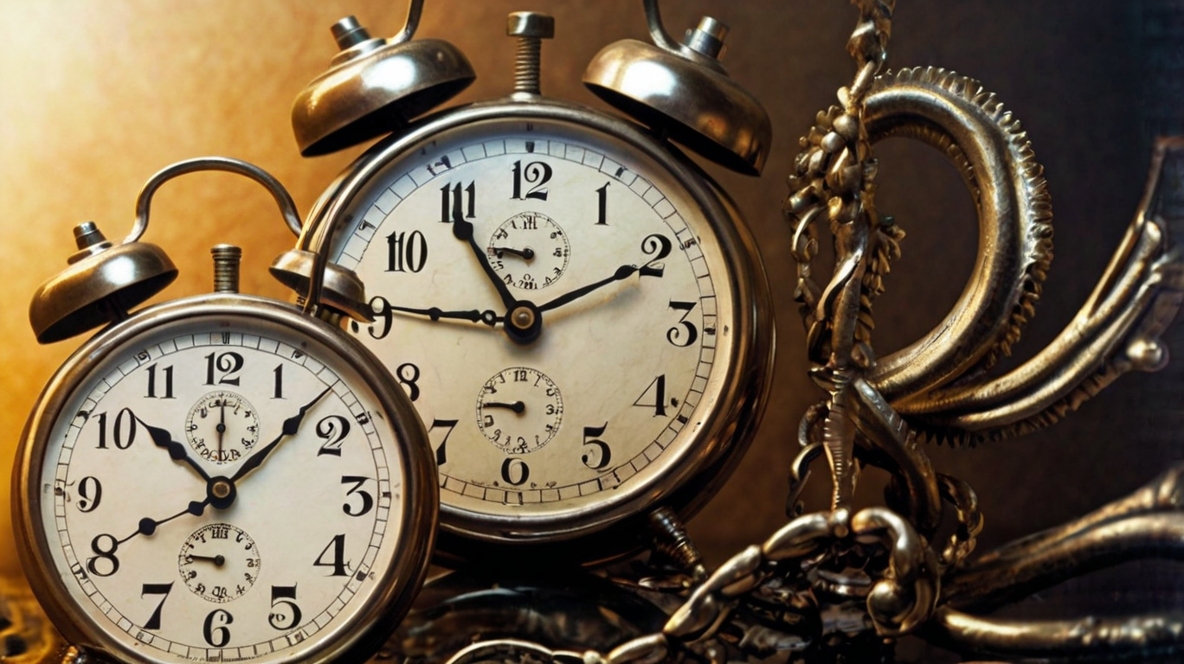
Have you ever noticed how time seems to speed up when you’re enjoying yourself, but drags on endlessly when you’re bored? This curious phenomenon of time perception is deeply rooted in the workings of our brain. From psychological factors to neurological processes, time perception plays a critical role in our day-to-day experiences. Let’s dive into the science of why time sometimes flies and at other times drags.
What is Time Perception?
Time perception refers to the subjective experience of time, which is influenced by multiple internal and external factors. While time itself remains constant, how we perceive its passage varies depending on our mental state, environment, and even our age. Time perception is a fundamental part of how humans process and interpret the world, connecting both psychological and neuroscientific principles.
The Role of Psychology in Time Perception
Psychology plays a key role in how we perceive time. Some common factors that influence this perception include attention, memory, and emotion.
- Attention: When you’re highly focused on a task or activity, you often lose track of time, which can make it seem like it has passed quickly. Conversely, if you’re waiting for something or watching the clock, time appears to slow down.
- Memory: The way we recall events also alters our perception of time. Novel experiences tend to be remembered in greater detail, which can make them seem longer in hindsight. Routine or repetitive tasks, on the other hand, are often forgotten quickly, creating the sensation that time has flown by.
- Emotional State: Emotions have a strong impact on time perception. Positive emotions—like joy and excitement—are typically associated with the feeling that time is speeding up. Negative emotions, such as anxiety or boredom, tend to stretch time, making it feel slower.
Neuroscience Behind Time Perception
While psychology influences our subjective experience of time, neuroscience offers a glimpse into the brain’s mechanisms that shape time perception.
- The Brain’s Internal Clock: Neuroscientists suggest that the brain operates an internal clock, which helps us measure time intervals. The basal ganglia and prefrontal cortex are two regions of the brain involved in this process. These regions monitor the passage of time, allowing us to predict and estimate time intervals.
- Dopamine Levels: Dopamine, a neurotransmitter associated with reward and pleasure, also affects time perception. High levels of dopamine can speed up our internal clock, causing time to seem to pass more quickly. Low levels of dopamine, often associated with depression or stress, can slow down this clock, making time drag.
- Age and Time Perception: Age significantly impacts time perception. As we get older, time seems to move faster. This phenomenon may be linked to the fact that novel experiences become less frequent with age, making the passage of time feel shorter in hindsight.
Why Time Flies or Drags in Different Situations
- During Exciting Activities: Engaging activities capture our attention and are usually accompanied by high levels of dopamine, which can make time seem to pass quickly. Whether you’re immersed in a new hobby or hanging out with friends, your brain’s internal clock is ticking faster.
- When Bored or Anxious: On the flip side, when you’re bored or anxious, you tend to focus more on the passage of time, which can make it seem to stretch on forever. Low dopamine levels during these periods also contribute to this slow perception of time.
- Under Stress: Interestingly, during stressful or dangerous situations, our perception of time may slow down. This is thought to be an evolutionary mechanism that helps us react to threats by allowing us to process more information in a short period.
How to Hack Your Time Perception
While you can’t change the actual passage of time, there are ways to manipulate how you perceive it:
- Engage in New Experiences: Trying out new activities and stepping out of your comfort zone can help slow down your perception of time, as novel experiences are processed more thoroughly by the brain.
- Mindfulness and Flow States: Mindfulness practices, such as meditation, can help you focus on the present moment, altering your perception of time. Achieving a “flow state,” where you are fully immersed in an activity, can also make time seem to fly by.
- Break the Routine: Repetitive routines tend to make days blend together, giving the impression that time is passing faster. To counter this, introduce variety into your schedule, whether through new hobbies or spontaneous activities.