




















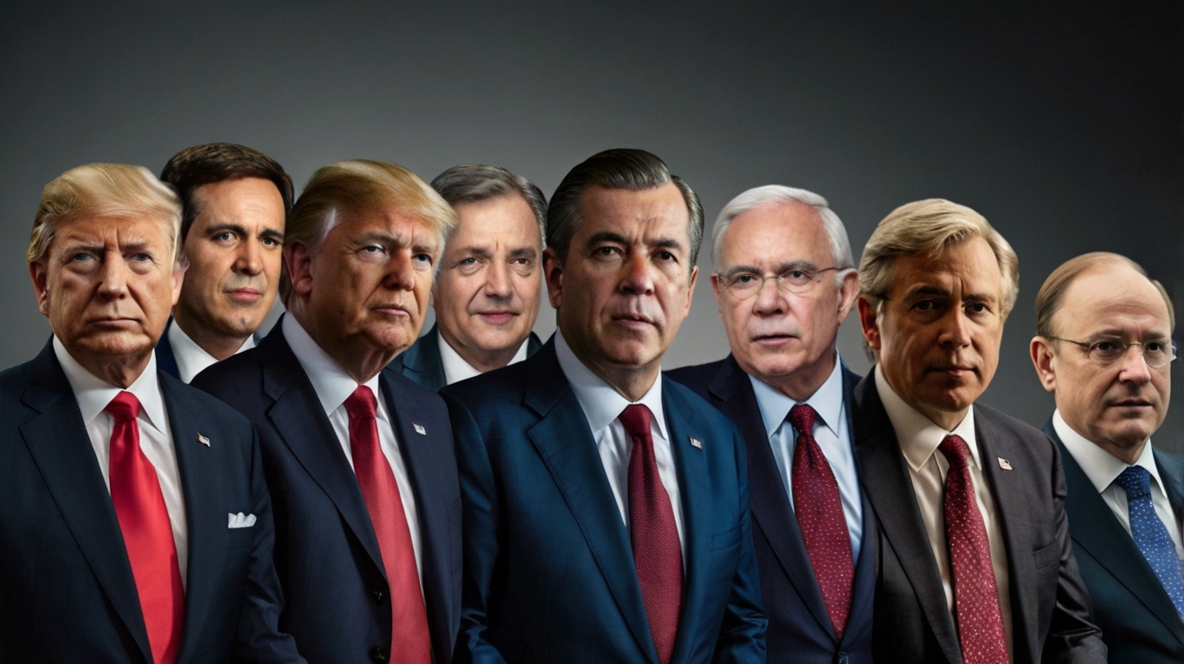
In the dynamic landscape of global politics, certain leaders distinguish themselves through their significant influence and decisive actions. As of 2025, here are the top 10 most influential political leaders shaping the world:
1. Donald Trump – President of the United States
Re-elected in 2024, President Donald Trump has reasserted American dominance on the global stage. His administration’s policies reflect a shift towards neo-imperialism, with proposals to expand U.S. territories and a transactional approach to international relations. Trump’s assertive foreign policy has redefined traditional alliances and global power structures.
2. Xi Jinping – President of China
Xi Jinping continues to solidify China’s position as a global superpower. Under his leadership, China has pursued aggressive economic and territorial expansion, notably emphasizing the Belt and Road Initiative and asserting claims in the South China Sea. Xi’s vision aims to reshape the international order in favor of Chinese inte
3. Vladimir Putin – President of Russia
President Vladimir Putin remains a pivotal figure in global politics. His strategic maneuvers, particularly in Eastern Europe, reflect a desire to reestablish Russian influence reminiscent of its imperial past. Putin’s actions have significant implications for regional stability and international relations.
4. Narendra Modi – Prime Minister of India
Prime Minister Narendra Modi has propelled India onto the global stage through economic reforms and active foreign diplomacy. Hosting the 2023 G20 Summit, Modi emphasized a human-centric development approach, addressing climate change and debt restructuring, and advocating for the interests of the Global So
5. Giorgia Meloni – Prime Minister of Italy
As Italy’s first female prime minister, Giorgia Meloni has emerged as a prominent conservative voice in Europe. Her policies focus on national sovereignty, immigration control, and traditional values. Meloni’s leadership has influenced European Union dynamics and the broader discourse on nationalism.
6. Javier Milei – President of Argentina
Elected in 2023, President Javier Milei has introduced radical economic reforms in Argentina, including significant spending cuts and deregulation. His libertarian approach aims to revitalize the nation’s economy and reduce state intervention, positioning Argentina as a case study in free-market policies.
7. Ursula von der Leyen – President of the European Commission
Ursula von der Leyen has been instrumental in steering the European Union through challenges such as climate change and political discord. Her leadership emphasizes unity and resilience, advocating for policies that address both environmental sustainability and democratic values.
8. Narendra Modi – Prime Minister of India
Prime Minister Narendra Modi has significantly influenced global politics by strengthening India’s economy and international partnerships. His leadership in hosting the 2023 G20 Summit showcased India’s growing role in addressing global challenges.
9. Charlie Kirk – Founder of Turning Point USA
Charlie Kirk has emerged as a significant figure within the conservative movement in the United States. Through his organization, Turning Point USA, Kirk has influenced young conservatives and shaped political discourse, extending his impact to media, politics, and faith groups.
10. Hakeem Jeffries – House Minority Leader, United States
As the House Minority Leader, Hakeem Jeffries plays a crucial role in shaping legislative priorities and strategies for the Democratic Party. His leadership is pivotal in navigating the party through a period of reorganization and opposition.
These leaders exemplify the diverse approaches and ideologies shaping global politics in 2025, each leaving a distinct mark on international relations and policy-making.