







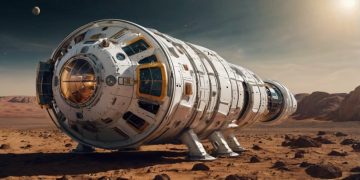












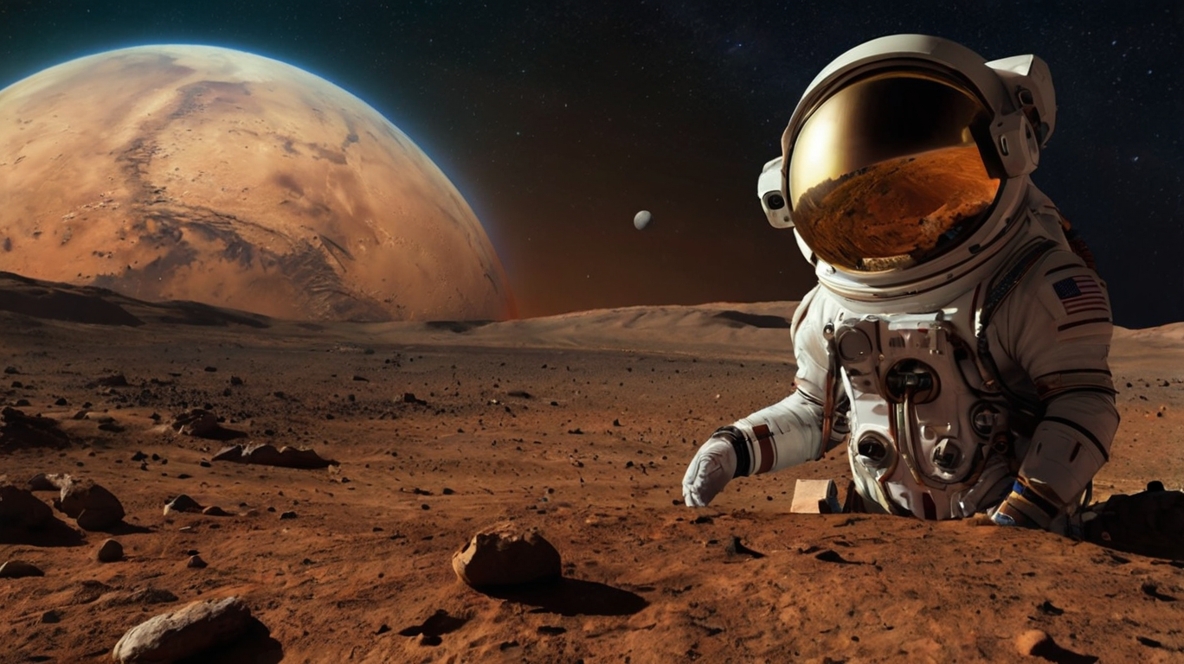
Humanity’s fascination with space has reached new heights, with ambitious plans for Mars exploration, lunar bases, and deep-space missions. As technology advances, space agencies like NASA, SpaceX, and ESA are pushing the boundaries of what’s possible. But what does the future hold for space exploration? Let’s dive into the exciting developments shaping the next era of cosmic discovery.
1. The Race to Mars: Humanity’s Next Giant Leap
Why Mars?
Mars has long been a target for space agencies due to its similarities to Earth. Scientists believe Mars once had water and may have supported microbial life. Establishing a human presence on Mars could unlock answers about the past and future of planetary habitability.
Upcoming Mars Missions
- NASA’s Artemis and Mars Sample Return Missions – NASA aims to return rock samples from Mars and prepare for human exploration in the 2030s.
- SpaceX’s Starship – Elon Musk envisions Starship as the vehicle that will colonize Mars, with plans for a crewed mission as early as the 2020s.
- China’s Tianwen Program – China is ramping up Mars exploration with follow-up missions to its successful Tianwen-1 rover.
Challenges of Mars Colonization
- Harsh radiation exposure
- Psychological and physiological effects of long-duration space travel
- Sustainable life-support systems
- Transporting materials for construction and energy generation
2. The Moon: A Stepping Stone for Deep-Space Exploration
Building a Permanent Lunar Base
NASA’s Artemis program aims to return humans to the Moon and establish a sustainable lunar base by the late 2020s. The Moon serves as a perfect testing ground for Mars missions due to its proximity and lower gravity, making it ideal for resource utilization.
Key Lunar Missions in the Pipeline
- NASA’s Artemis Program – The Artemis III mission will land the first woman and person of color on the Moon.
- Lunar Gateway – A planned space station orbiting the Moon to support long-term missions.
- China and Russia’s ILRS (International Lunar Research Station) – A joint effort to build a scientific base on the Moon.
Why a Lunar Base Matters
- Provides a testing ground for Mars missions
- Enables in-situ resource utilization (extracting water for fuel and life support)
- Advances scientific research on space environments
3. Beyond Mars: The Future of Deep-Space Missions
Exploring the Outer Solar System
While Mars and the Moon are the immediate focus, scientists are eyeing missions beyond. Jupiter’s moon Europa and Saturn’s moon Titan are top candidates for future robotic exploration.
- Europa Clipper (NASA) – A mission launching in the 2030s to investigate Europa’s subsurface ocean for potential life.
- Dragonfly (NASA) – A drone mission to Titan, set to launch in 2027, to study its thick atmosphere and potential prebiotic chemistry.
Interstellar Exploration: The Next Frontier
- Breakthrough Starshot – A project aiming to send tiny probes to the nearest star system, Alpha Centauri, using light-powered sails.
- Nuclear Propulsion Technologies – Space agencies are developing nuclear-powered spacecraft to speed up deep-space travel.
Final Thoughts: A New Space Age is Here
With advancements in technology, global collaboration, and commercial space travel, the dream of interplanetary colonization is becoming a reality. The next few decades will witness historic milestones in Mars exploration, lunar base construction, and deep-space missions. As humanity ventures into the cosmos, we stand on the brink of a new era in space exploration—one that could redefine our place in the universe.