




















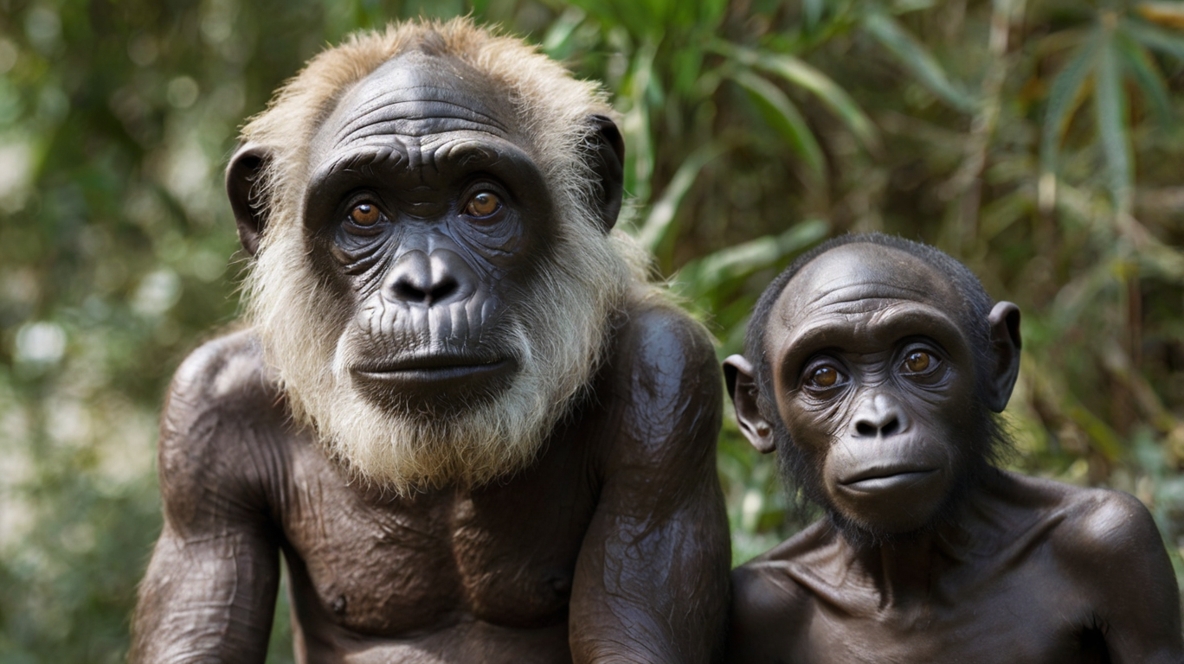
The Evolution of Human Species is one of the most intriguing subjects within the fields of anthropology and prehistoric science. Over millions of years, the human species has undergone numerous changes—both physical and behavioral—leading us to the Homo sapiens of today. But how did we get here? What do we know so far about the evolution of humans, and how has the field of anthropology helped shape our understanding of prehistoric science?
In this article, we’ll explore the key milestones in human evolution, the scientific discoveries that have shed light on our origins, and the fascinating journey of how we became the dominant species on Earth.
The Beginnings: From Ape-Like Ancestors to Early Hominins
The story of human evolution begins millions of years ago with our distant ape-like ancestors. According to fossil evidence, early hominins—members of the human lineage—split from the ancestors of modern chimpanzees and bonobos around 6-7 million years ago. This split marked the beginning of a distinct evolutionary path that would eventually lead to humans.
Key early hominins, such as Sahelanthropus tchadensis and Australopithecus afarensis (famously known as “Lucy”), provide crucial insights into the early stages of human evolution. These species walked on two legs (bipedalism), a critical adaptation that set humans apart from other primates.
The Rise of Genus Homo: A New Chapter in Human Evolution
Around 2.5 million years ago, the first members of the genus Homo emerged. This marked a significant step in the evolution of humans, as these early species, such as Homo habilis, began using tools, displaying increased brain size, and developing more complex social structures.
The discovery of Homo erectus, which appeared approximately 1.9 million years ago, marked another leap in human evolution. Homo erectus was the first species to leave Africa, spreading into parts of Asia and Europe. With their larger brains, advanced tool-making skills, and use of fire, Homo erectus set the stage for future species like Homo neanderthalensis (Neanderthals) and Homo sapiens.
The Emergence of Homo sapiens: Modern Humans
The final chapter in the evolutionary story so far is the emergence of Homo sapiens, which appeared around 300,000 years ago in Africa. Our species showed remarkable adaptability, intelligence, and social development, which allowed us to eventually outcompete other hominins, such as the Neanderthals, who went extinct around 40,000 years ago.
The reasons behind the Neanderthals’ extinction remain a topic of debate among anthropologists. Some theories suggest that competition for resources, climate change, or interbreeding with early Homo sapiens may have contributed to their disappearance.
Prehistoric Science: The Tools of Human Evolution Research
Advances in prehistoric science have revolutionized our understanding of human evolution. Fossil evidence, combined with modern techniques like DNA analysis and radiometric dating, have allowed researchers to paint a more detailed picture of our origins.
One of the most groundbreaking discoveries in recent years is the identification of a new species, Homo naledi, in South Africa. Discovered in 2013, Homo naledi was notable for its mix of primitive and modern traits, suggesting that the human evolutionary tree is more complex than previously thought.
Moreover, the sequencing of ancient DNA has revealed surprising interbreeding events between Homo sapiens, Neanderthals, and another mysterious group known as Denisovans. These genetic exchanges have left traces in modern human populations, particularly in people of European and Asian descent.
What’s Next? The Future of Human Evolution Research
The field of human evolution is constantly evolving, with new discoveries being made regularly. Questions still remain about the exact relationships between different hominin species, the role of climate change in shaping our evolutionary path, and the factors that led to the dominance of Homo sapiens.
As technology continues to advance, anthropology and prehistoric science will likely uncover more clues about our ancient past. Each new fossil discovery or DNA breakthrough brings us closer to understanding the full story of human evolution.