




















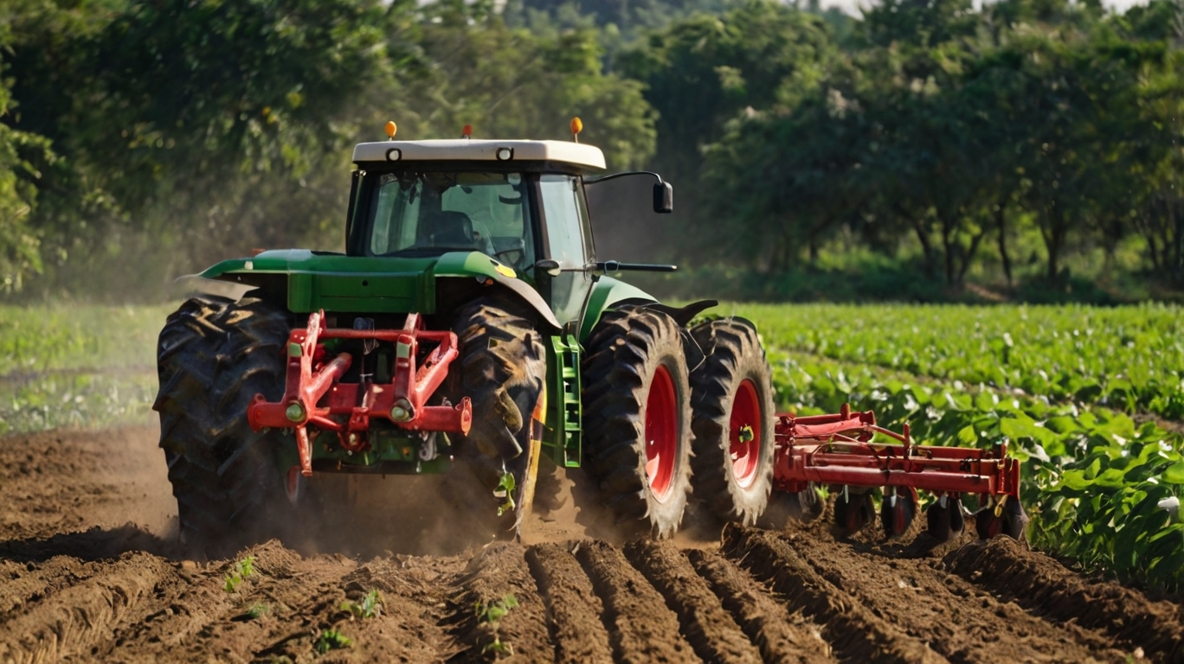
In a world facing rapid population growth, climate change, and environmental degradation, sustainable agriculture has emerged as a vital solution to ensure food security while minimizing the ecological footprint. Combining farming innovation, advanced food science, and environmentally conscious practices, sustainable agriculture is redefining how we produce food and protect our planet. This article explores key innovations in sustainable farming and how they are shaping the future of agriculture.
1. Precision Farming: Maximizing Efficiency
Precision farming is a cutting-edge technique that utilizes data-driven technology to optimize crop production. Through satellite imagery, GPS systems, and sensors, farmers can monitor soil conditions, water levels, and crop health in real time. This allows them to apply resources like water and fertilizers more efficiently, reducing waste and lowering the environmental impact of farming.
Key Benefits:
- Reduces water and fertilizer use
- Lowers greenhouse gas emissions
- Increases crop yields with minimal resources
2. Vertical Farming: A Space-Saving Solution
As urbanization continues to expand, finding space for traditional farming is becoming more challenging. Vertical farming offers a sustainable solution by growing crops in stacked layers within controlled environments. These indoor farms use less water and land while maintaining optimal conditions for year-round crop production. LED lighting and hydroponic systems enhance energy efficiency, making vertical farming a key player in the future of food production.
Key Benefits:
- Saves up to 95% of water compared to traditional farming
- Requires less land, ideal for urban settings
- Reduces transportation emissions by localizing food production
3. Regenerative Agriculture: Restoring the Soil
Regenerative agriculture focuses on rebuilding soil health and enhancing biodiversity. Practices such as cover cropping, no-till farming, and rotational grazing improve the soil’s ability to sequester carbon, reduce erosion, and support diverse ecosystems. This holistic approach not only reduces the environmental damage of conventional farming but also improves the resilience of farms to extreme weather events.
Key Benefits:
- Increases soil fertility and biodiversity
- Enhances water retention and reduces erosion
- Mitigates climate change by sequestering carbon
4. Biotechnology and Genomics: Enhancing Crop Resilience
Advancements in biotechnology and genomics are paving the way for crops that are more resistant to pests, diseases, and climate extremes. Genetic modifications and gene-editing technologies like CRISPR are helping scientists develop crops that require fewer chemical inputs, reducing the reliance on pesticides and herbicides. These innovations enhance food security while minimizing the negative impacts on ecosystems.
Key Benefits:
- Creates pest-resistant and drought-tolerant crops
- Reduces the need for chemical inputs
- Improves food security in regions with extreme climates
5. Aquaponics and Hydroponics: Water-Efficient Farming
Water scarcity is one of the greatest challenges facing global agriculture. Aquaponics and hydroponics are water-efficient systems that allow plants to grow without soil. Hydroponics uses nutrient-rich water to nourish crops, while aquaponics integrates fish farming with plant production, creating a closed-loop system. Both methods reduce water usage significantly, making them ideal for regions prone to drought.
Key Benefits:
- Uses up to 90% less water than traditional farming
- Produces faster-growing crops
- Ideal for areas with limited access to arable land
6. Artificial Intelligence (AI) and Robotics: Automating the Future of Farming
AI and robotics are transforming the agricultural landscape by automating various aspects of farming, from planting and harvesting to monitoring crop health. AI-powered systems can analyze vast amounts of data to predict weather patterns, pest outbreaks, and optimal planting times. Meanwhile, robots can perform labor-intensive tasks with precision, reducing the need for manual labor and increasing productivity.
Key Benefits:
- Improves decision-making through data analysis
- Reduces labor costs and time
- Enhances accuracy in farming operations
7. Sustainable Livestock Farming: Reducing the Carbon Hoofprint
Livestock farming is a significant contributor to greenhouse gas emissions, but innovations in this area are helping to mitigate its impact. Sustainable practices like rotational grazing, methane-reducing feed additives, and improved manure management are reducing the carbon footprint of livestock farming. Additionally, alternative protein sources like lab-grown meat and plant-based proteins are gaining traction as sustainable alternatives to traditional animal products.
Key Benefits:
- Reduces methane emissions from livestock
- Improves land management and soil health
- Provides sustainable alternatives to animal protein