




















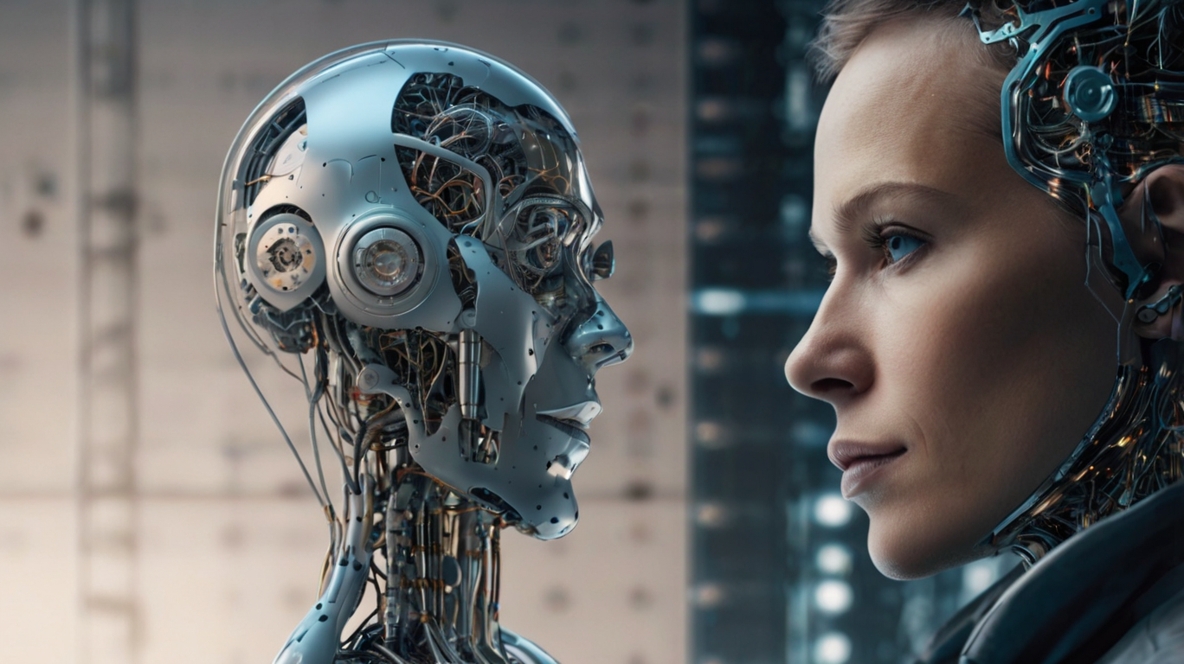
Artificial Intelligence and the Future of Scientific Discovery
The world of scientific research is undergoing a profound transformation. What was once the domain of human intuition, trial, and error is now increasingly being shaped by Artificial Intelligence (AI). In recent years, AI in discovery has evolved from a conceptual tool to a cornerstone of cutting-edge research, helping scientists make faster, more accurate predictions, analyze complex data, and uncover breakthroughs that would have been impossible just a few years ago. As artificial intelligence research advances, its potential to reshape the future of science seems boundless.
In this article, we will explore how AI is driving scientific discovery in 2024, the role of machine learning in scientific research, and the profound impact AI is having on various scientific disciplines.
The Role of AI in Scientific Discovery
At its core, artificial intelligence is about creating algorithms that can learn from data and make decisions or predictions based on that knowledge. In the context of scientific discovery, AI can perform tasks that would take humans months or even years in a fraction of the time. This includes everything from analyzing vast datasets to simulating complex models of the natural world.
AI-driven machine learning algorithms are able to recognize patterns in massive datasets that might be invisible to the human eye. This ability to analyze vast amounts of data quickly is a game-changer for scientific research, making it possible to uncover hidden insights that lead to new theories, innovations, and discoveries. Whether it’s in genomics, climate science, materials engineering, or drug discovery, AI is becoming an indispensable tool for researchers across the globe.
Key Areas Where AI is Revolutionizing Scientific Discovery
1. Drug Discovery and Development
One of the most exciting applications of AI in science is its potential to revolutionize drug discovery. Traditionally, developing a new drug is a slow and expensive process, often taking years of trial and error in laboratories. AI is helping to speed up this process by predicting how different compounds will interact with biological systems.
For example, AI algorithms can screen millions of chemical compounds in seconds to identify promising candidates for further testing. Machine learning models can predict the efficacy and toxicity of new drugs, streamlining the process of identifying viable candidates. In 2024, researchers are using AI to discover new treatments for diseases like cancer, Alzheimer’s, and COVID-19 at a pace never seen before.
Moreover, AI is helping identify new biomarkers, design clinical trials more effectively, and even personalize treatments based on an individual’s genetic makeup. Artificial intelligence research in the medical field is thus accelerating the path from lab to bedside, making healthcare more precise and accessible.
2. Climate Science and Environmental Research
In the face of climate change, scientists are turning to AI to make more accurate predictions and uncover innovative solutions to environmental challenges. With the increasing complexity of climate models and the vast amounts of data collected from satellites, sensors, and oceanographic studies, AI is becoming essential in understanding and mitigating the effects of global warming.
AI models are used to analyze patterns in climate data, predict weather changes, and forecast natural disasters. They are also instrumental in researching and developing clean energy solutions, such as optimizing solar panels and wind turbines. Moreover, machine learning science is helping improve carbon capture technology by identifying the most effective materials for absorbing CO₂ and creating more sustainable processes.
In 2024, AI’s ability to simulate environmental systems is driving forward critical research on carbon footprint reduction and sustainability, providing scientists with invaluable tools to address the most pressing challenges of our time.
3. Materials Science and Nanotechnology
Another exciting frontier for AI is materials science. Whether it’s designing new materials with specific properties for manufacturing or advancing the development of nanotechnology, AI is enhancing how we create and innovate. By simulating the atomic structure of new materials, AI can predict their behavior under various conditions, saving researchers time and resources in testing.
For example, AI algorithms can assist in the design of lightweight yet strong materials for use in aerospace, construction, and even medical devices. Machine learning also helps researchers optimize the production processes for these materials, improving efficiency and reducing waste. In nanotechnology, AI is enabling breakthroughs in the development of self-assembling materials and advanced drug delivery systems.
In 2024, researchers are using AI to develop more sustainable, efficient, and versatile materials that can transform industries ranging from energy production to consumer goods.
4. Astronomy and Space Exploration
The universe is vast, and understanding it requires processing an immense amount of data. Astronomy and space exploration have long been at the cutting edge of technological development, and AI in research is enhancing our ability to explore outer space. Machine learning algorithms are used to analyze data from telescopes, satellites, and spacecraft to detect celestial objects, monitor space weather, and even study black holes.
AI-powered systems are also helping scientists interpret the data sent back from space missions. For instance, NASA uses AI to help its rovers analyze terrain, identify areas of interest, and even make decisions about which samples to collect. In 2024, AI tools are not just assisting in data analysis but also driving autonomous decision-making in deep space exploration.
5. Genomics and Precision Medicine
The field of genomics is another area where AI is making a transformative impact. The human genome is vast, with over three billion base pairs of DNA, and decoding it is an enormous task. AI, especially machine learning algorithms, can help researchers understand how genetic variations contribute to diseases, predict disease outcomes, and design personalized treatments based on an individual’s genetic profile.
In 2024, AI is being used to accelerate the discovery of genetic mutations linked to diseases, facilitate gene editing (such as with CRISPR technology), and create more effective treatments for genetic disorders. AI-powered tools are also being developed to map the human microbiome, opening up new possibilities for personalized medicine and better health outcomes.
The Future of AI in Scientific Discovery
As artificial intelligence research continues to advance, the potential applications in science are almost limitless. In the near future, we can expect to see more AI-driven tools that can make scientific research faster, more accurate, and more accessible. These technologies will not only enhance our understanding of the natural world but also enable scientists to solve complex problems that were previously insurmountable.
Here are a few potential developments we can expect in the coming years:
- AI-Driven Autonomous Labs: In the near future, we might see fully autonomous AI-powered labs that conduct experiments and analyze results without human intervention. This could revolutionize the speed and scale of scientific discovery.
- Quantum Computing and AI: As quantum computing matures, it will significantly enhance AI’s ability to solve even more complex scientific problems. Quantum AI could be used to simulate molecular interactions in ways that were once thought impossible, speeding up the development of new drugs and materials.
- Ethical AI in Science: With AI playing a bigger role in research, ensuring ethical guidelines for its use will be critical. Researchers will need to address issues related to data privacy, bias in AI algorithms, and the potential for AI to perpetuate existing inequalities.