




















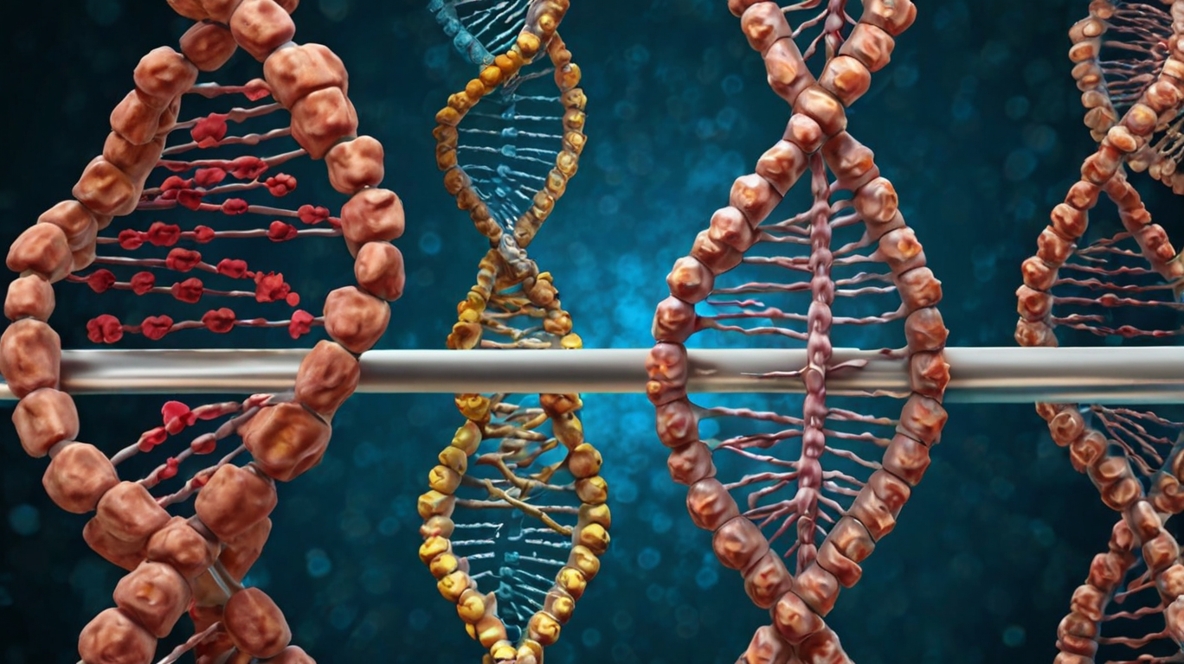
Understanding Genetic Mutations are the driving forces behind both the diversity of life and certain health challenges. They play a critical role in evolution, shaping the traits and adaptations of species over time, while also being key factors in many genetic disorders. In this article, we’ll dive into the causes and consequences of genetic mutations, offering insight into their vital role in genetics, evolution, and human health.
What Are Genetic Mutations?
Genetic mutations refer to changes in the DNA sequence that make up a gene. These changes can occur spontaneously or be induced by environmental factors. Mutations may involve a single DNA base (point mutations), large segments of a chromosome, or even entire genes. Depending on the nature of the mutation, it can be harmless, beneficial, or harmful.
Types of Genetic Mutations:
- Point Mutations – These involve a change in a single base pair in DNA. Subtypes include:
- Silent mutations: No effect on the protein produced.
- Missense mutations: Change in one amino acid in the protein.
- Nonsense mutations: Creation of a stop signal, leading to a truncated, non-functional protein.
- Insertions/Deletions – When one or more nucleotide base pairs are added or removed from the DNA sequence, leading to frame-shift mutations.
- Chromosomal Mutations – Affect larger sections of chromosomes, potentially impacting many genes at once. They can cause conditions such as Down syndrome, where there is an extra copy of chromosome 21.
Causes of Genetic Mutations
Several factors can lead to mutations, some of which occur naturally, while others are influenced by external factors. The causes can be categorized as follows:
1. Spontaneous Mutations
Spontaneous mutations arise from natural errors in DNA replication. As cells divide and DNA is copied, errors occasionally occur, leading to new mutations. While most errors are corrected by the cell’s repair mechanisms, some may slip through.
2. Environmental Factors
Environmental influences such as radiation, chemicals, and viruses can damage DNA and cause mutations. For example, exposure to UV radiation from the sun can cause skin cells to mutate, increasing the risk of skin cancer. Chemical mutagens, like tobacco smoke, are also well-known triggers for genetic mutations, often leading to cancer.
3. Inherited Mutations
Mutations can be passed down from parents to offspring. These inherited genetic mutations, such as those seen in hereditary diseases like cystic fibrosis or Huntington’s disease, are present in the DNA from birth.
Consequences of Genetic Mutations
The effects of mutations vary widely, from being completely harmless to having significant implications for an organism’s survival and reproduction. Here are some of the potential outcomes:
1. Beneficial Mutations
Some mutations can confer advantages. For example, a mutation that increases an organism’s resistance to a particular disease may increase its chances of survival, ultimately becoming more common in the population over generations. Beneficial mutations drive evolution, allowing species to adapt to new environments.
2. Neutral Mutations
Many mutations are neutral and have no observable effect on the organism. These mutations might not change the function of a protein, or they occur in non-coding regions of the DNA.
3. Harmful Mutations
Harmful mutations can lead to genetic disorders or increase the likelihood of developing diseases like cancer. For instance, mutations in the BRCA1 and BRCA2 genes significantly raise the risk of breast and ovarian cancer.
4. Evolutionary Significance
Over millions of years, genetic mutations have been central to evolution. Mutations introduce new traits into a population, and those traits may provide a survival advantage in changing environments. Without mutations, evolution would grind to a halt, and species would lack the genetic diversity needed to adapt.
Genetic Mutations and Health Science
In the field of health science, understanding genetic mutations is crucial for diagnosing and treating various diseases. Researchers can identify specific mutations associated with genetic disorders, allowing for better screening, prevention, and therapies. Genetic testing can provide insight into an individual’s risk for conditions like Alzheimer’s, cancer, or heart disease, paving the way for personalized medicine.
1. Genetic Testing
Advancements in genetic testing have enabled scientists to detect mutations early, offering patients the opportunity to manage or even prevent diseases. For example, individuals with a family history of a genetic condition can undergo testing to determine whether they carry mutations that put them at risk.
2. Gene Therapy
Gene therapy aims to treat genetic disorders by correcting or replacing the faulty genes responsible for the disease. While still in the experimental stage for many conditions, gene therapy has shown promise in treating disorders like cystic fibrosis and certain types of cancer.