




















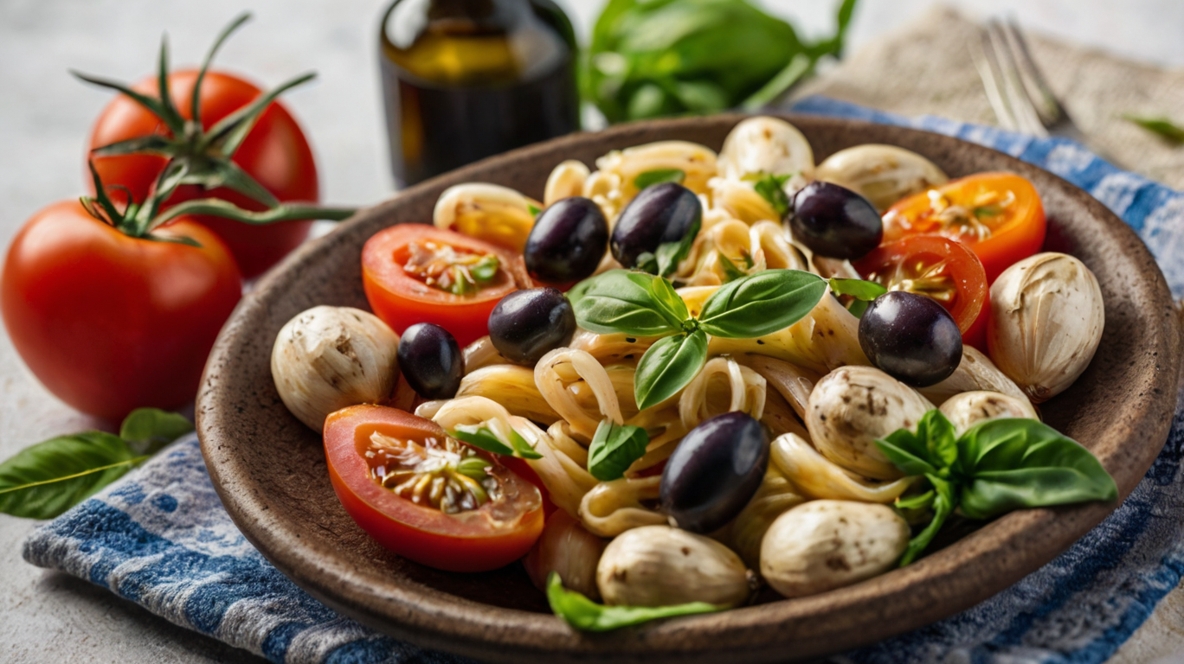
Top 5 Mediterranean Diet Foods is renowned for its numerous health benefits, including improved heart health, better weight management, and reduced inflammation. By incorporating wholesome ingredients rich in nutrients, this balanced diet emphasizes plant-based foods, healthy fats, and lean proteins. Whether you’re seeking heart-healthy meals or simply aiming for a healthier lifestyle, these top 5 Mediterranean diet foods should be staples in your kitchen.
1. Olive Oil
One of the cornerstones of the Mediterranean diet, olive oil is rich in healthy monounsaturated fats. Known for its anti-inflammatory properties, olive oil also helps reduce the risk of heart disease and stroke. It’s versatile and can be used for cooking, drizzling over salads, or as a dipping sauce with whole-grain bread.
Health Benefits:
- Lowers bad cholesterol (LDL) levels.
- Packed with antioxidants.
- Reduces inflammation and promotes heart health.
How to Use:
- Drizzle extra virgin olive oil over your favorite salads.
- Use as a cooking oil for vegetables and lean proteins.
- Try making Mediterranean-style dips like hummus with olive oil for added flavor.
2. Leafy Greens
Leafy greens like spinach, kale, and arugula are essential in a Mediterranean diet. These nutrient-dense vegetables are packed with vitamins, minerals, and antioxidants that support overall health. They are also low in calories, making them a great choice for weight management.
Health Benefits:
- High in fiber, supporting digestion.
- Rich in vitamins A, C, and K.
- Contains antioxidants that protect against cell damage.
How to Use:
- Add leafy greens to salads, wraps, or sandwiches.
- Incorporate spinach into a Mediterranean-inspired smoothie.
- Sauté kale with garlic and olive oil for a quick, healthy side dish.
3. Fatty Fish
Salmon, mackerel, and sardines are rich sources of omega-3 fatty acids, which are crucial for heart health. Omega-3s help reduce inflammation and support brain function. These fatty fish also provide high-quality protein and essential vitamins, making them a staple in the Mediterranean diet.
Health Benefits:
- Reduces the risk of cardiovascular disease.
- Supports brain health and cognitive function.
- Provides essential nutrients like vitamin D and selenium.
How to Use:
- Grill or bake salmon for a delicious Mediterranean main course.
- Incorporate sardines into salads or enjoy on whole-grain toast with olive oil.
- Add mackerel to pasta dishes or grain bowls for a nutrient boost.
4. Whole Grains
Whole grains like quinoa, farro, and barley are rich in fiber, vitamins, and minerals. Unlike refined grains, whole grains contain all parts of the grain, making them more nutritious and beneficial for maintaining stable blood sugar levels and improving heart health.
Health Benefits:
- Helps regulate blood sugar levels.
- Supports digestive health with high fiber content.
- Reduces the risk of heart disease.
How to Use:
- Substitute refined grains with quinoa or farro in salads and bowls.
- Cook barley as a base for Mediterranean soups or stews.
- Enjoy whole-grain pita bread with your favorite Mediterranean dips like hummus or baba ganoush.
5. Legumes
Legumes such as lentils, chickpeas, and beans are packed with plant-based protein, fiber, and essential nutrients. These versatile ingredients are often featured in Mediterranean recipes, adding heartiness and flavor to dishes without the need for heavy meats.
Health Benefits:
- Rich in plant-based protein and fiber.
- Promotes heart health and reduces cholesterol.
- Helps with weight management due to their filling nature.
How to Use:
- Add chickpeas to salads, stews, or make homemade hummus.
- Incorporate lentils into soups or serve them as a side dish with vegetables.
- Use black beans in Mediterranean-style grain bowls or wraps.
Incorporating These Foods into Your Mediterranean Diet
The Mediterranean diet focuses on balance and variety, incorporating a wide range of nutrient-dense foods that promote long-term health. By adding these top 5 foods—olive oil, leafy greens, fatty fish, whole grains, and legumes—to your meals, you can enhance your well-being and enjoy delicious, heart-healthy recipes. Remember to pair these ingredients with regular physical activity and mindful eating habits to fully reap the benefits of a Mediterranean lifestyle.