




















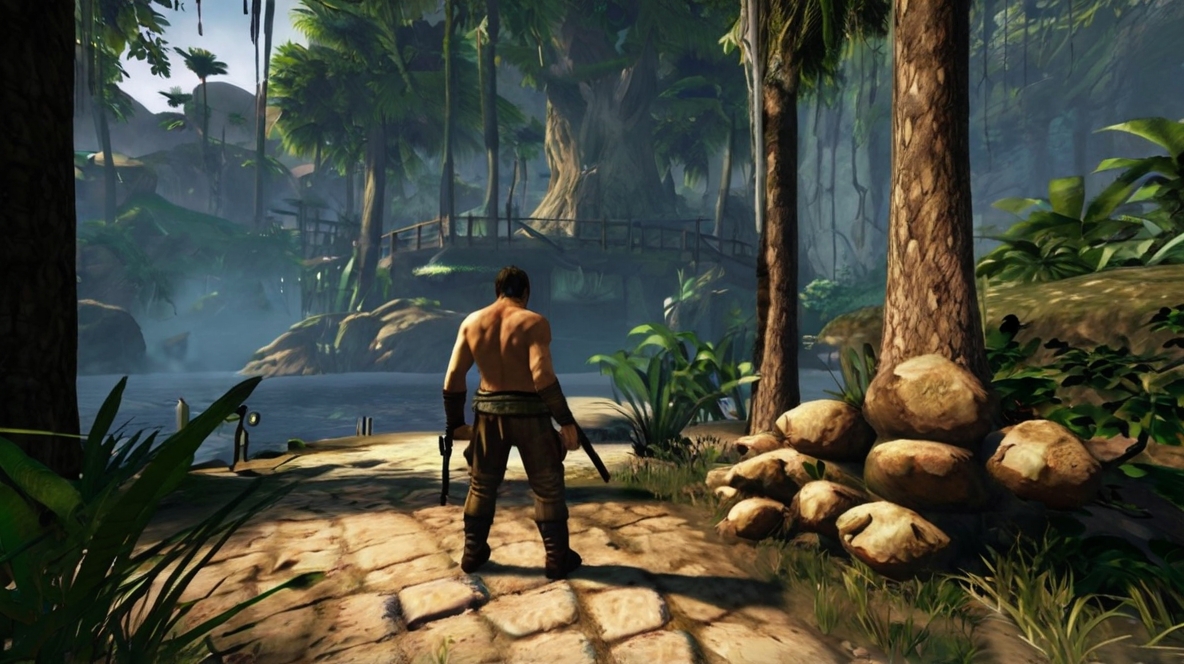
The world of video games has undergone a tremendous transformation over the decades, with game graphics at the forefront of this evolution. From pixelated beginnings to photorealistic renderings, the visual evolution of video games is a testament to technological advancements and creative ingenuity. Let’s take a trip through video game history and explore how game graphics have evolved over the years.
The Early Days: Pixels and Sprites
The journey of game graphics began with simple pixels and sprites. In the late 1970s and early 1980s, games like Space Invaders and Pac-Man introduced the world to video gaming with their basic, yet captivating, visual designs. These early games relied heavily on 2D graphics, where each image was constructed from small squares known as pixels. Despite their simplicity, these games captured the imagination of players and laid the foundation for future innovations.
The 8-bit and 16-bit Era: Colorful and Detailed
As technology progressed, the 8-bit and 16-bit eras brought more color and detail to game graphics. Iconic titles like Super Mario Bros. and The Legend of Zelda showcased vibrant worlds and characters that were more expressive and detailed than their predecessors. The Nintendo Entertainment System (NES) and Sega Genesis were instrumental in pushing the boundaries of what could be achieved in game graphics, offering players a richer visual experience.
The 3D Revolution: A New Dimension
The mid-1990s marked a significant milestone in the visual evolution of video games with the advent of 3D graphics. The release of consoles like the Sony PlayStation and Nintendo 64 introduced gamers to fully realized 3D environments. Games such as Super Mario 64 and Tomb Raider allowed players to navigate three-dimensional worlds, adding depth and realism to the gaming experience. This era also saw the development of polygonal modeling techniques, which became the standard for creating 3D game graphics.
The Rise of Realism: HD and Beyond
With the launch of the Xbox 360 and PlayStation 3 in the mid-2000s, game graphics took another leap forward into high-definition (HD) territory. The visual fidelity of games improved dramatically, with titles like Gears of War and Uncharted offering stunningly detailed environments and lifelike character models. This period also saw the introduction of advanced lighting, shading, and texture mapping techniques, further enhancing the realism of video game graphics.
The Current Generation: Photorealism and Virtual Reality
Today, game graphics have reached new heights of photorealism, thanks to the power of modern hardware and sophisticated software tools. The PlayStation 5 and Xbox Series X have set new benchmarks for visual quality, with games like Demon’s Souls and Cyberpunk 2077 delivering breathtakingly realistic visuals. Moreover, the advent of virtual reality (VR) has opened up new possibilities for immersive experiences, allowing players to step inside virtual worlds like never before.
The Future: Beyond Realism
As we look to the future, the evolution of game graphics shows no signs of slowing down. With advancements in artificial intelligence, machine learning, and real-time ray tracing, the line between virtual and reality continues to blur. Developers are constantly pushing the envelope, exploring new ways to create more dynamic and interactive visual experiences. From augmented reality (AR) to holographic displays, the future of game graphics is limited only by our imagination.