




















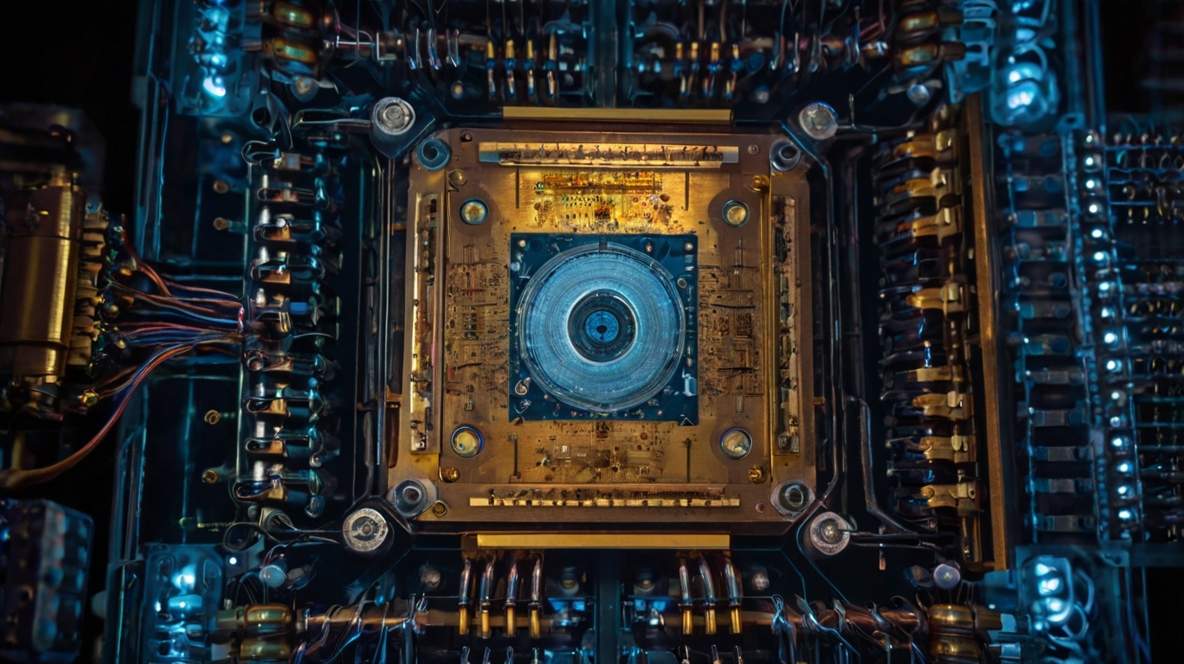
In 2025, quantum computing is no longer a theoretical dream—it’s a growing reality that’s reshaping the future of computing. As advances in quantum physics continue to accelerate, we are witnessing the dawn of a new era in science and technology trends that could change everything from artificial intelligence to drug discovery and encryption.
What Is Quantum Computing?
At its core, quantum computing harnesses the bizarre and powerful laws of quantum physics to process information. Unlike classical computers that use bits (0s and 1s), quantum computers use qubits, which can exist in multiple states simultaneously thanks to a phenomenon called superposition. Additionally, qubits can be entangled, allowing information to be shared instantly between them, regardless of distance.
These principles make quantum computers incredibly powerful for specific types of problems that are impossible—or would take millions of years—for classical machines to solve.
Quantum Computing in 2025: Key Developments
The year 2025 marks a pivotal time in quantum research and application. Here are some of the most exciting trends:
1. Commercial Use Cases Are Emerging
Quantum computing is now being tested in real-world applications. Industries such as finance, logistics, and pharmaceuticals are beginning to use quantum algorithms to optimize complex systems and solve large-scale simulations.
2. Quantum Cloud Services
Major tech giants like IBM, Google, and Amazon are offering quantum computing via the cloud, allowing businesses and researchers to access quantum processors remotely.
3. Improved Qubit Stability
One of the biggest technical challenges—qubit decoherence—is being addressed through better error correction, cryogenics, and quantum chip engineering. In 2025, we are seeing longer qubit coherence times and more reliable quantum gates.
4. Quantum Cryptography
As quantum computers advance, so does the need for post-quantum encryption. New cryptographic algorithms are being developed to secure data in a world where classical encryption could be cracked by quantum machines.
5. Governments and Startups Are Heavily Investing
Governments around the world, including the U.S., China, and the EU, are investing billions into quantum research. Startups are also thriving, creating innovative hardware and software to bring quantum computing to market faster.
The Future of Computing: Beyond Moore’s Law
For decades, Moore’s Law—the idea that the number of transistors on a chip doubles every two years—guided computing growth. But as we hit the physical limits of silicon, quantum computing represents a leap forward, not just an incremental improvement.
Quantum computing in 2025 is not a replacement for classical computers but a complementary technology. It’s particularly suited for solving problems in:
-
Artificial Intelligence & Machine Learning
-
Climate Modeling
-
Materials Science
-
Cryptography
-
Financial Modeling
Challenges Ahead
Despite the progress, challenges remain. Quantum computers are still highly sensitive to their environment, require extreme cooling, and are limited in scalability. However, breakthroughs in materials science and quantum error correction are rapidly overcoming these obstacles.
Why Quantum Computing Matters in 2025
Quantum computing is more than a scientific curiosity—it’s a transformative tool for innovation. As we look toward the future of computing, the role of quantum physics in solving humanity’s toughest problems is undeniable.
Whether you’re a tech enthusiast, investor, or student of science, understanding quantum computing in 2025 means staying ahead of the curve in the next great technological revolution.