




















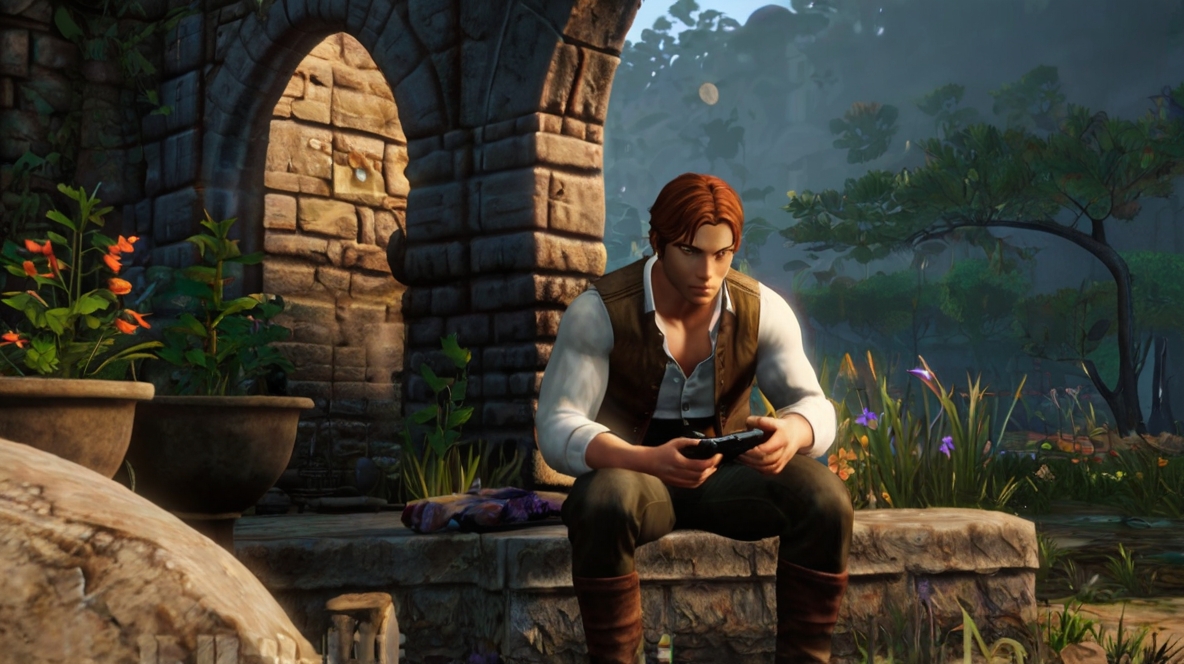
In the rapidly evolving world of video games, one element remains timeless and universally essential: storytelling. Game storytelling has transcended from simple narratives to complex, immersive experiences that captivate players and create lasting memories. This evolution highlights the vital role of storytelling in video games, transforming them from mere entertainment into profound, engaging journeys.
The Evolution of Game Storytelling
In the early days of gaming, stories were simple and often secondary to gameplay. Titles like “Pong” and “Tetris” focused more on mechanics than narrative. However, as technology advanced, so did the potential for more intricate and immersive game storytelling. Games like “The Legend of Zelda” and “Final Fantasy” introduced players to rich worlds and deep characters, setting the stage for the narrative-driven experiences we see today.
Modern video games often rival movies and novels in their storytelling prowess. Titles like “The Last of Us,” “Red Dead Redemption 2,” and “The Witcher 3: Wild Hunt” offer complex plots, emotional depth, and character development that engage players on multiple levels. These games demonstrate how storytelling has become a core element, enhancing the overall gaming experience.
The Impact of Immersive Games
Immersive games leverage storytelling to draw players into their worlds, making them feel like an integral part of the narrative. This immersion is achieved through various techniques, including detailed world-building, dynamic character interactions, and branching storylines that respond to player choices.
One of the key aspects of immersive games is their ability to create a sense of presence. By crafting believable worlds and relatable characters, developers allow players to lose themselves in the story. Games like “Bioshock Infinite” and “Mass Effect” use environmental storytelling and player agency to build immersive experiences that resonate deeply with audiences.
Engaging Games and Player Investment
Engaging games are those that capture and maintain player interest through compelling narratives and interactive elements. Storytelling in these games often goes beyond linear plots, incorporating elements such as moral dilemmas, character relationships, and open-world exploration.
Games like “The Elder Scrolls V: Skyrim” and “Cyberpunk 2077” offer expansive worlds with countless stories waiting to be discovered. These games encourage players to explore, interact with NPCs (non-playable characters), and make choices that affect the game’s outcome. This level of engagement fosters a strong emotional connection between the player and the game, making the experience more memorable.
The Future of Game Storytelling
As technology continues to advance, the future of game storytelling looks promising. Innovations in virtual reality (VR) and augmented reality (AR) are poised to revolutionize how stories are told in games, offering even more immersive and engaging experiences. Additionally, the rise of artificial intelligence (AI) could lead to more dynamic and responsive narratives, where the game adapts to the player’s actions in real-time.
The role of storytelling in video games will only grow as developers continue to push the boundaries of what is possible. By prioritizing narrative alongside gameplay, the industry can create more immersive and engaging games that resonate with players on a deeper level.