




















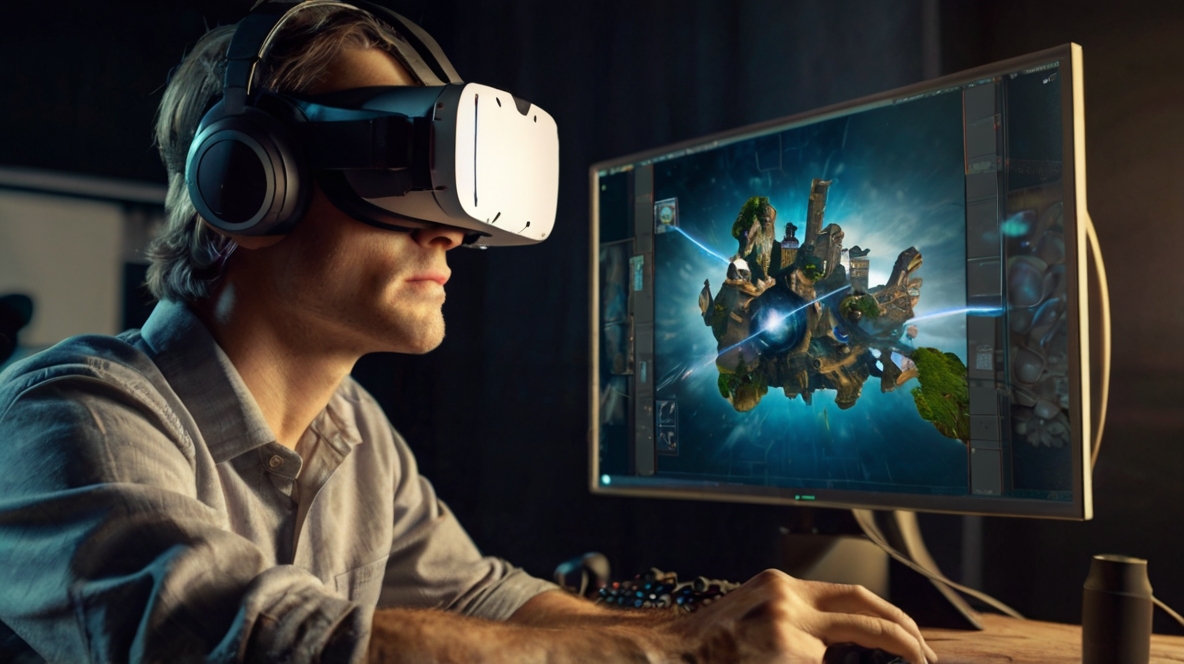
The world of gaming has undergone a radical transformation over the past few decades. From the simplistic 8-bit graphics of early arcade games to the photorealistic visuals of modern consoles, the gaming industry has continually pushed the boundaries of what is possible. One of the most significant advancements in recent years has been the rise of immersive technologies like Virtual Reality (VR) and Augmented Reality (AR). As these technologies evolve, they promise to redefine the gaming experience even further. In this blog, we will explore the evolution of gaming, focusing on VR, AR, and what lies beyond.
The Rise of Virtual Reality (VR) in Gaming
Early Beginnings
Virtual Reality is not a new concept; its roots can be traced back to the 1960s with the invention of the first VR head-mounted display system by Ivan Sutherland. However, it wasn’t until the 2010s that VR technology became accessible to the general public. The launch of Oculus Rift in 2012 marked a significant milestone, bringing high-quality VR experiences to gamers worldwide.
Current State
Today, VR gaming has become mainstream, with major players like Sony’s PlayStation VR, HTC Vive, and Oculus Quest leading the charge. These devices offer immersive experiences, allowing players to step inside their favorite games and interact with virtual environments in ways previously unimaginable. Games like “Beat Saber,” “Half-Life: Alyx,” and “Resident Evil 7” have showcased the potential of VR, offering deeply engaging and interactive experiences.
Future Prospects
The future of VR gaming looks promising, with ongoing advancements in technology set to enhance the immersive experience further. Improvements in haptic feedback, eye-tracking, and wireless capabilities are on the horizon, making VR more accessible and enjoyable. Moreover, the integration of AI and machine learning could lead to even more realistic and responsive virtual environments.
The Emergence of Augmented Reality (AR) in Gaming
Early Innovations
While VR immerses players in entirely virtual worlds, AR overlays digital content onto the real world. AR gaming gained significant attention with the release of “Pokémon GO” in 2016. The game’s success demonstrated the potential of AR to blend the digital and physical worlds seamlessly.
Current Trends
Today, AR continues to evolve, with games like “Minecraft Earth” and “Harry Potter: Wizards Unite” building on the foundation laid by “Pokémon GO.” These games leverage smartphone technology to create interactive and social experiences that encourage players to explore their real-world surroundings.
Future Developments
The future of AR gaming is closely tied to advancements in wearable technology, such as smart glasses. Companies like Apple and Google are rumored to be developing AR glasses that could revolutionize the way we interact with digital content. Imagine playing a game where the characters and environments are seamlessly integrated into your daily life, creating a truly immersive experience.
Beyond VR and AR: The Next Frontier in Gaming
Mixed Reality (MR)
Mixed Reality (MR) combines elements of both VR and AR, creating a hybrid experience that allows digital and physical objects to coexist and interact in real-time. Microsoft’s HoloLens is a prime example of MR technology, offering a glimpse into the future of gaming where virtual and real-world elements blend seamlessly.
Brain-Computer Interfaces (BCI)
Brain-Computer Interfaces (BCI) represent the cutting edge of gaming technology. BCIs enable direct communication between the brain and the computer, allowing for control of games through thought alone. While still in the experimental stage, BCIs hold the potential to create deeply immersive and intuitive gaming experiences.
Cloud Gaming
Cloud gaming is another exciting development on the horizon. Services like Google Stadia, NVIDIA GeForce Now, and Microsoft’s Xbox Cloud Gaming (formerly Project xCloud) allow gamers to stream high-quality games on any device with an internet connection. This technology could make high-end gaming more accessible, eliminating the need for expensive hardware.