




















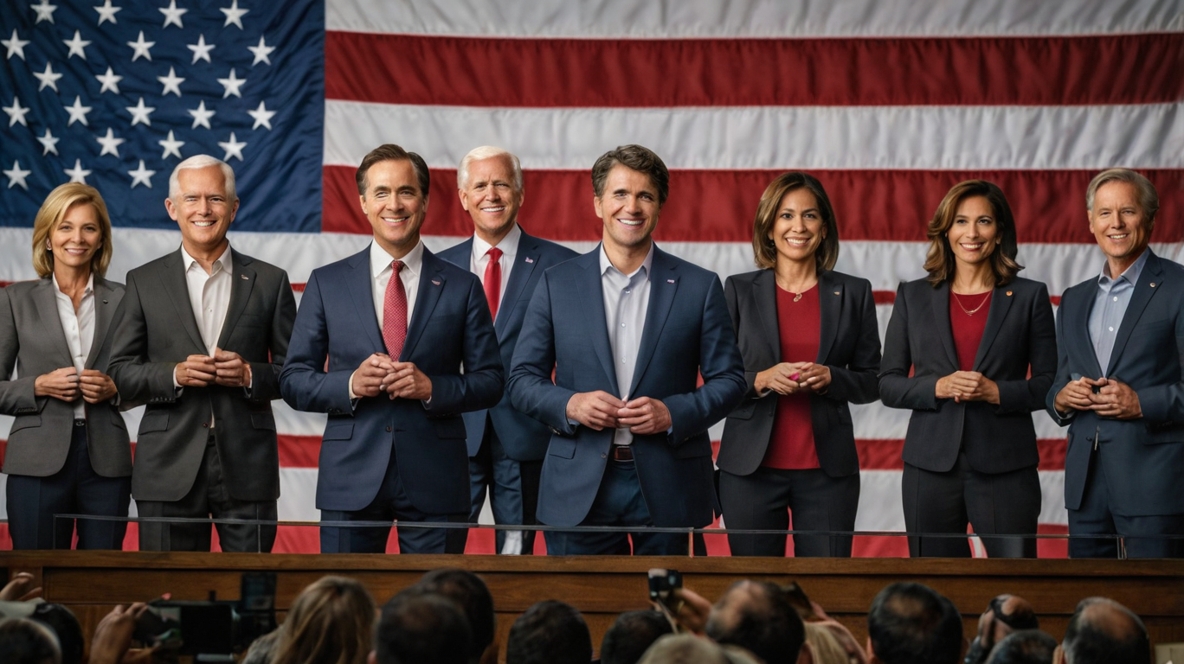
U.S. Presidential Candidates to Watch in 2024: Key Contenders and Political Campaigns
As the 2024 U.S. presidential election approaches, political analysts, voters, and party strategists are keeping a close eye on the presidential candidates who will shape the future of the nation. With a diverse field of contenders from both major parties, the 2024 race promises to be one of the most consequential in recent history.
In this article, we’ll explore the top U.S. presidential candidates for 2024, highlighting their key platforms, political campaigns, and the potential impact they could have on the future of the United States.
1. Joe Biden (Democratic Party)
Incumbent President’s Bid for Re-Election
Joe Biden, the current president of the United States, is seeking re-election in 2024. After taking office in 2021, Biden’s administration has focused on several key issues, including economic recovery, climate change, and healthcare reform. With major accomplishments such as the passage of the American Rescue Plan and the Infrastructure Investment and Jobs Act, Biden’s political campaign will likely highlight his efforts to rebuild the U.S. economy after the COVID-19 pandemic.
Key Campaign Issues:
- Climate Action: Biden has prioritized renewable energy investment and reducing carbon emissions, positioning himself as a leader in the global climate crisis.
- Healthcare: Biden’s administration continues to advocate for expanding access to affordable healthcare, with an emphasis on strengthening Obamacare.
- Foreign Policy: With a focus on rebuilding relationships with allies, Biden’s campaign will likely highlight his leadership in handling international crises, such as Russia’s invasion of Ukraine.
Biden’s re-election bid will face challenges from both within his party and from the Republican opposition, but his record and ability to unify diverse political factions could be key in securing a second term.
2. Donald Trump (Republican Party)
The Return of the Former President
Donald Trump, the 45th president of the United States, has announced his candidacy for the 2024 election. Trump remains a powerful figure in the Republican Party, with significant influence over its base. His America First policies, including a hard stance on immigration, tax cuts, and deregulation, are expected to be central themes in his 2024 political campaign.
Key Campaign Issues:
- Immigration Reform: Trump is likely to continue advocating for stricter immigration policies, including building a wall along the U.S.-Mexico border.
- Economic Growth: His campaign will focus on revitalizing the U.S. economy through tax cuts and deregulation aimed at boosting job growth and attracting business investment.
- National Security and Foreign Policy: Trump’s stance on national security, including his “America First” foreign policy, will be a significant part of his platform, emphasizing strength and self-reliance on the global stage.
Despite facing legal challenges and controversy, Trump remains a dominant force in American politics and is poised to rally his base in the upcoming election.
3. Ron DeSantis (Republican Party)
Florida Governor with National Ambitions
Ron DeSantis, the governor of Florida, has emerged as a leading figure in the Republican Party, gaining national attention for his handling of the COVID-19 pandemic and his conservative stances on issues such as education and social policy. DeSantis is often viewed as a younger, more dynamic alternative to Trump, though he shares many of the former president’s political priorities.
Key Campaign Issues:
- Education Reform: DeSantis has focused on conservative education policies, including bans on certain curriculum topics like Critical Race Theory and expanded parental control over school choices.
- Economic Policy: DeSantis advocates for pro-business policies, including tax cuts and deregulation, aimed at creating jobs and stimulating economic growth.
- Conservative Social Policies: He has also championed conservative stances on issues such as gun rights, abortion, and LGBTQ+ rights, which resonate with many conservative voters.
DeSantis is expected to appeal to both Trump’s base and more moderate Republican voters, making him a formidable candidate in the GOP primaries.
4. Kamala Harris (Democratic Party)
Vice President’s Path to the Presidency?
While Kamala Harris has not yet formally announced her candidacy for 2024, many political analysts believe she could be a contender, especially if President Biden decides not to seek re-election or faces challenges within his party. As the first woman and first person of South Asian and African descent to serve as vice president, Harris has become a trailblazer in American politics.
Key Campaign Issues:
- Equity and Justice: Harris has been a strong advocate for criminal justice reform, racial equity, and gender equality, making these issues central to her political platform.
- Healthcare and Education: Like Biden, Harris supports expanding access to healthcare and education, particularly through policies like free community college and expanded access to the Affordable Care Act.
- Foreign Relations: As vice president, Harris has played a significant role in U.S. diplomacy, and her campaign may focus on international cooperation and advancing global human rights.
Should Harris decide to run, she would be a strong contender, particularly if the Democratic Party looks for fresh leadership.
5. Elizabeth Warren (Democratic Party)
The Progressive Voice in the Race
Elizabeth Warren, the Massachusetts senator and former presidential candidate, remains a key figure in the progressive wing of the Democratic Party. Known for her focus on economic inequality and consumer protection, Warren has been an outspoken advocate for policies that target corporate greed and Wall Street excess.
Key Campaign Issues:
- Wealth Inequality: Warren’s platform focuses heavily on addressing the growing wealth gap through tax reforms that would impose higher taxes on the wealthy and large corporations.
- Corporate Accountability: She advocates for stricter regulations on big business and has pushed for policies to rein in financial institutions and monopolistic practices.
- Universal Childcare and Healthcare: Warren has supported universal access to affordable childcare and a push toward Medicare for All.
Warren’s progressive agenda could energize liberal voters, particularly those who are dissatisfied with the more moderate positions of Biden.
6. Gavin Newsom (Democratic Party)
California Governor with a Strong Progressive Record
Gavin Newsom, the governor of California, has gained attention for his leadership on climate change, economic recovery, and healthcare reform. As a strong advocate for progressive policies, Newsom is frequently mentioned as a potential 2024 presidential candidate, particularly in the event of a contested Democratic primary.
Key Campaign Issues:
- Climate Leadership: Newsom has prioritized climate change initiatives in California, including ambitious clean energy and carbon emission reduction goals.
- Healthcare for All: Like other Democrats, Newsom supports expanding access to healthcare, with some advocating for universal healthcare models.
- Progressive Economic Policies: Newsom’s agenda includes addressing income inequality, housing affordability, and expanding social safety nets.
His record as a progressive governor in the largest state in the U.S. gives him a strong foundation to attract support from both liberals and moderates in the Democratic Party.
7. Nikki Haley (Republican Party)
Former UN Ambassador and South Carolina Governor
Nikki Haley, the former governor of South Carolina and U.S. ambassador to the United Nations under Donald Trump, is frequently mentioned as a potential Republican candidate for president in 2024. Haley has cultivated a reputation as a diplomatic and pragmatic politician, making her a potential challenger to Trump and DeSantis for the GOP nomination.
Key Campaign Issues:
- National Security and Foreign Policy: As a former UN ambassador, Haley is well-versed in foreign policy and national security issues, advocating for a strong U.S. presence on the global stage.
- Economic Policy: Haley supports tax cuts, deregulation, and pro-business policies aimed at spurring job creation.
- Social Issues: While often positioning herself as a moderate on certain social issues, Haley has leaned into conservative stances on topics like abortion and religious freedom.
Haley’s unique blend of diplomatic experience and conservative credentials could make her an appealing candidate to a wide range of Republican voters.