




















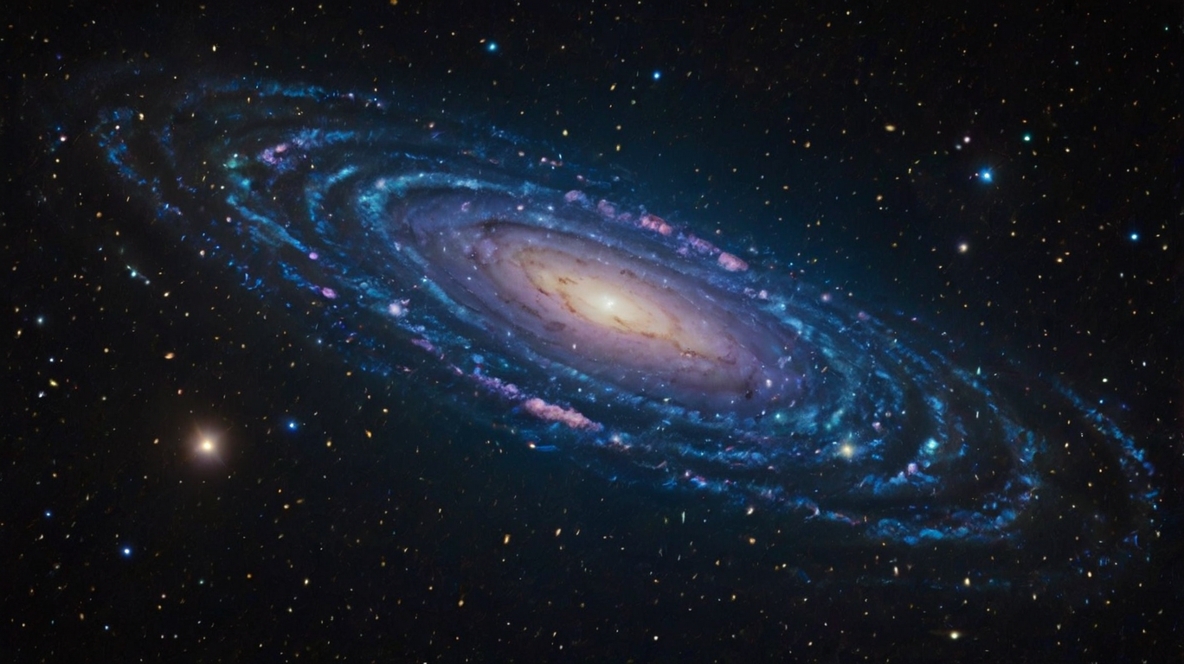
Exploring the Mysteries of Dark Matter in 2024
In the vast expanse of the universe, one of the most perplexing and elusive phenomena remains dark matter. Despite making up approximately 27% of the universe’s mass-energy content, scientists still know very little about what dark matter actually is. In 2024, dark matter research is advancing at a remarkable pace, with new discoveries and experiments shedding light on its potential role in the universe’s structure and behavior.
In this article, we will delve into the latest developments in dark matter research and explore how scientists are approaching this cosmic mystery. From cutting-edge technology to breakthrough discoveries, let’s look at where the field stands today and what might be on the horizon for space science in 2024.
What is Dark Matter?
Before diving into the latest research and discoveries, it’s important to understand what dark matter is and why it is so significant in the field of cosmology. Dark matter refers to a type of matter that doesn’t emit, absorb, or reflect light, making it invisible to current astronomical instruments. Despite being invisible, its presence is inferred from its gravitational effects on visible matter, such as galaxies and galaxy clusters.
Dark matter does not interact with electromagnetic forces (light, heat, etc.), which is why it remains undetectable by traditional means. However, its gravitational pull influences the movement of stars, galaxies, and other celestial objects, suggesting that it makes up a significant portion of the universe’s mass.
The Significance of Dark Matter in Space Science
Dark matter plays a crucial role in our understanding of how the universe works. It has been theorized that dark matter is responsible for:
- Galactic formation: Dark matter helps galaxies form and maintain their structure by providing the gravitational pull needed to hold them together.
- Cosmic evolution: Understanding dark matter may offer insights into the overall evolution of the universe, including its expansion.
- Accelerating the search for new physics: Dark matter research pushes the boundaries of physics, potentially offering evidence for new particles or forces that we don’t yet understand.
Despite its critical importance, dark matter discoveries have been few and far between, largely because it doesn’t interact with light. However, significant advancements in 2024 are beginning to shed light on this cosmic enigma.
Recent Advancements in Dark Matter Research (2024)
In 2024, the pace of discovery in dark matter research has quickened significantly. From advanced telescopes to groundbreaking laboratory experiments, researchers are getting closer to unlocking the secrets of dark matter. Let’s look at some of the most notable dark matter discoveries and advancements in 2024.
1. New Experiments and Detection Methods
Scientists have developed increasingly sophisticated experiments designed to detect dark matter particles directly. One of the most promising areas of research in 2024 involves the detection of weakly interacting massive particles (WIMPs), which are one of the leading candidates for dark matter. These particles are theorized to interact only via gravity and weak nuclear force, making them nearly impossible to detect. However, scientists are developing next-generation detectors that are sensitive enough to capture the faint signals from these elusive particles.
For example, the XENONnT experiment, which is based in Italy, uses a large volume of liquid xenon to try and detect dark matter interactions. This cutting-edge detector has shown promising results in 2024, with a significant reduction in background noise, making it more likely to detect potential dark matter signals.
2. The Role of the James Webb Space Telescope
Launched in late 2021, the James Webb Space Telescope (JWST) has already begun to make strides in understanding the universe’s most puzzling phenomena, including dark matter. In 2024, the JWST has provided unprecedented views of distant galaxies and galaxy clusters. By observing the gravitational lensing effects—where dark matter bends light around galaxy clusters—scientists are able to map dark matter’s distribution and influence on visible matter.
The telescope’s ability to observe high-redshift galaxies (those formed very early in the universe’s history) is also helping researchers study the role dark matter may have played in the formation of the first galaxies.
3. The Dark Matter Particle Hunt
Scientists are also on a hunt for direct evidence of dark matter particles in laboratories. In 2024, researchers at the Large Hadron Collider (LHC) at CERN are running experiments to see if they can detect dark matter particles produced by high-energy collisions. One of the most intriguing experiments is the search for dark photons—hypothetical particles that could be a key to understanding the nature of dark matter. If dark photons exist, they could be detected through their interaction with normal matter in the LHC’s experiments.
Additionally, in 2024, direct detection experiments continue to search for dark matter’s potential interactions with atomic nuclei. Though no definitive results have been found yet, these experiments are becoming more sensitive, with the goal of eventually revealing dark matter’s true nature.
4. Cosmic Microwave Background (CMB) Studies
Another significant development in 2024 is the analysis of the Cosmic Microwave Background (CMB)—the faint afterglow of the Big Bang. By studying the fluctuations in the CMB, scientists can infer the presence and distribution of dark matter in the early universe. Recent studies, particularly from the Planck satellite and other observatories, have provided more detailed maps of dark matter’s effects on the CMB.
In 2024, new models of the CMB are helping cosmologists refine their understanding of dark matter’s role in the early universe’s expansion and structure. These findings are providing crucial clues to the nature of dark matter and its evolution alongside the universe itself.
5. Dark Matter and Alternative Theories
While WIMPs are still the leading candidate for dark matter, researchers are exploring alternative theories as well. Some scientists propose that axions, extremely light and hypothetical particles, could be responsible for dark matter. In 2024, experiments designed to detect axions through their interaction with magnetic fields are beginning to yield interesting results, although conclusive evidence is still elusive.
Additionally, the theory of modified gravity is gaining traction in some circles. This theory suggests that what we perceive as dark matter might actually be an effect of modified gravitational laws at cosmic scales, rather than an unknown form of matter. While still controversial, this alternative hypothesis has spurred new research and experimental efforts to test the nature of gravity in various environments.
What’s Next for Dark Matter Research?
Looking ahead, the future of dark matter discoveries in the coming years looks promising. Researchers are optimistic that advancements in technology, such as more sensitive detectors, better telescopes, and faster computational models, will allow them to gain a deeper understanding of this mysterious substance.
In particular, upcoming space missions and upgraded particle accelerators are expected to play a crucial role in dark matter research. As technology improves and more data is gathered, 2024 could be the year that scientists make a major breakthrough in uncovering the true nature of dark matter.