




















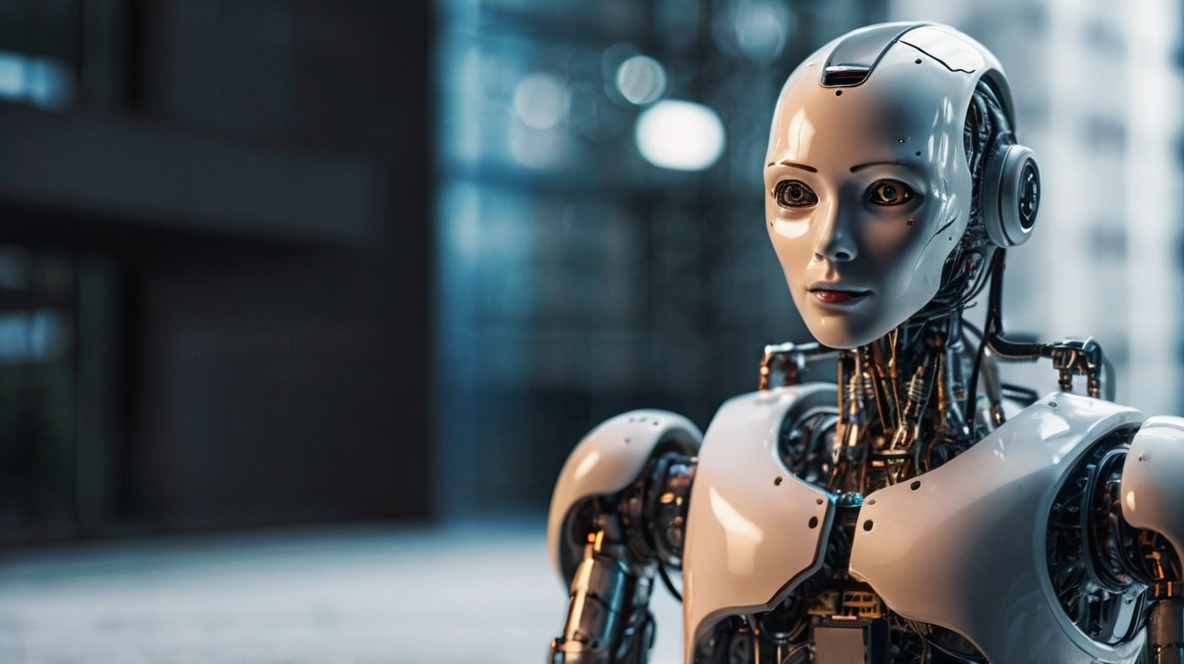
The rapid evolution of technology has led to significant advancements in the fields of Artificial Intelligence (AI) and robotics. As these two domains intersect, they are transforming industries, driving innovation, and reshaping our future. In this blog, we’ll explore the current trends at the intersection of AI and robotics, highlighting their impact and potential.
Understanding the Synergy Between AI and Robotics
AI and robotics, while distinct fields, complement each other remarkably well. AI provides the cognitive abilities needed for robots to perform complex tasks, while robotics offers the physical embodiment through which AI can interact with the real world. This synergy is leading to breakthroughs that were once considered the realm of science fiction.
1. Autonomous Vehicles
One of the most prominent examples of AI and robotics convergence is in the development of autonomous vehicles. Companies like Tesla, Waymo, and Uber are leveraging AI algorithms to enable cars to navigate and make decisions without human intervention. These self-driving cars use a combination of computer vision, machine learning, and sensor fusion to perceive their environment and react accordingly.
2. Healthcare Robotics
In healthcare, AI-powered robots are revolutionizing patient care and medical procedures. Surgical robots, such as the da Vinci Surgical System, are enhancing the precision and accuracy of surgeries. AI algorithms assist in diagnosing diseases by analyzing medical images and patient data. Furthermore, robots are being deployed for tasks like medication delivery, patient monitoring, and even companionship for the elderly.
3. Industrial Automation
The manufacturing sector has been a major beneficiary of AI and robotics integration. Collaborative robots, or cobots, work alongside human workers, augmenting their capabilities and increasing productivity. These robots can perform repetitive tasks with high precision, while AI systems optimize production processes by predicting maintenance needs and improving quality control.
4. Service Robots
Service robots are becoming increasingly prevalent in various industries, from hospitality to retail. AI enables these robots to understand and respond to human interactions, providing personalized customer experiences. For instance, hotels are using robots for room service deliveries, while retail stores employ them for inventory management and customer assistance.
5. AI in Drone Technology
Drones, or unmanned aerial vehicles (UAVs), are another area where AI and robotics converge. AI-powered drones are used in agriculture for crop monitoring, in disaster management for search and rescue operations, and in logistics for efficient package delivery. These drones utilize AI algorithms for navigation, obstacle avoidance, and data analysis.
6. Robotics in Space Exploration
Space agencies like NASA and ESA are utilizing AI and robotics for space exploration missions. Robots equipped with AI are sent to Mars and other celestial bodies to perform tasks that are too dangerous or impractical for humans. These robots can autonomously navigate, collect samples, and send valuable data back to Earth.
Challenges and Future Directions
While the intersection of AI and robotics holds immense promise, it also presents several challenges. Ethical considerations, such as ensuring the safety and privacy of individuals, must be addressed. Additionally, there are technical hurdles related to the reliability and robustness of AI algorithms and robotic systems.
Looking ahead, the future of AI and robotics is poised to be even more transformative. Advances in machine learning, natural language processing, and computer vision will further enhance the capabilities of robots. The integration of AI with edge computing and the Internet of Things (IoT) will enable real-time decision-making and seamless interaction between robots and their environments.