




















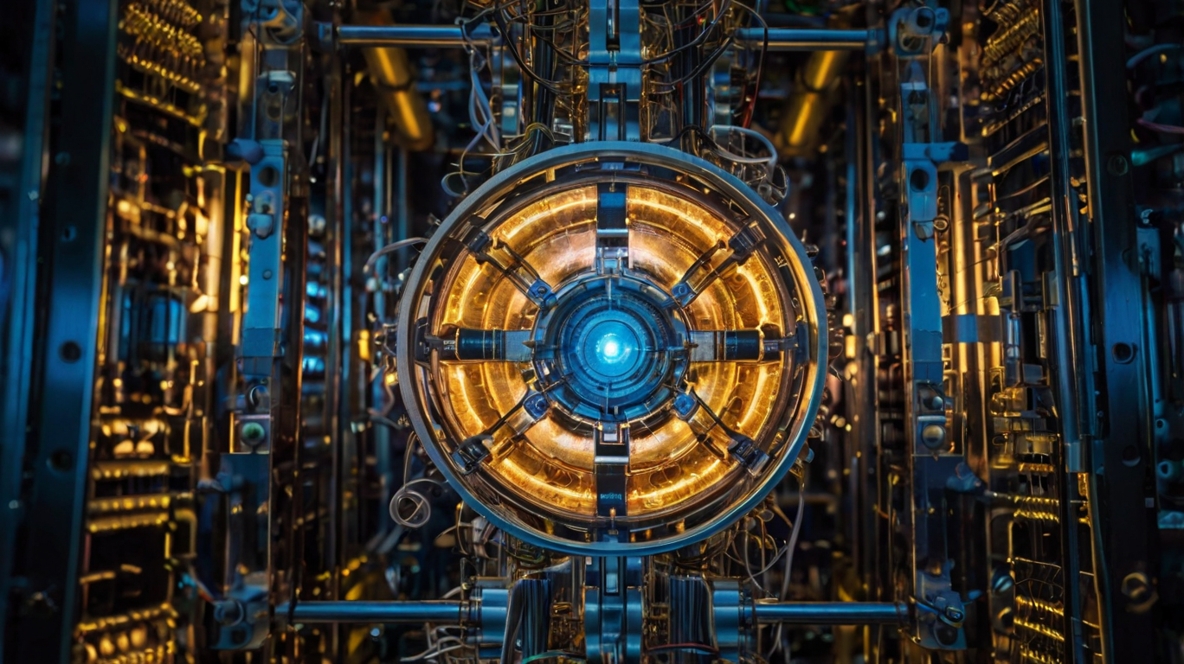
The Role of Quantum Computing in Modern Science is no longer a futuristic concept; it has rapidly transitioned into a groundbreaking field that is revolutionizing modern science. As we move through 2024, the potential of quantum computing to solve complex problems in physics, chemistry, biology, and even artificial intelligence is becoming more apparent. Unlike classical computers, which rely on bits to process data in binary form (0s and 1s), quantum computers use quantum bits (qubits), which can exist in multiple states simultaneously. This unique property allows quantum computers to process massive datasets and perform calculations that would take classical computers millions of years.
In this article, we’ll explore the exciting role quantum computing plays in modern science, its applications across different scientific fields, and how it could change the course of research and innovation in 2024 and beyond.
1. What is Quantum Computing?
Before delving into its impact on science, it’s essential to understand the basics of quantum computing. Unlike traditional computers, quantum computers exploit the principles of quantum mechanics — the science that governs the behavior of particles at the atomic and subatomic levels. Two key features of quantum computing make it so powerful:
- Superposition: A qubit can exist in multiple states at once, unlike a classical bit, which is either 0 or 1. This enables quantum computers to process vast amounts of data simultaneously.
- Entanglement: Qubits can become “entangled,” meaning the state of one qubit can be dependent on the state of another, regardless of the distance between them. This property allows quantum computers to solve problems that involve complex interdependencies.
These capabilities allow quantum computers to tackle computational problems that are far beyond the reach of today’s classical machines.
2. Quantum Computing and Physics: Unlocking the Mysteries of the Universe
One of the most exciting applications of quantum computing lies in the field of physics, particularly in the quest to understand the fundamental laws of nature. Quantum computers are capable of simulating the behavior of subatomic particles and complex quantum systems — something that’s almost impossible for classical computers to achieve due to the sheer complexity of quantum mechanics.
Key Breakthroughs in Physics:
- Particle Physics Simulations: Quantum computers could simulate complex particle interactions, helping physicists understand the behavior of fundamental particles, potentially leading to a deeper understanding of the universe’s origins and the mysteries of dark matter and dark energy.
- Quantum Gravity and String Theory: The computational power of quantum computers may allow researchers to explore theories of quantum gravity, which aim to reconcile general relativity and quantum mechanics. These theories could offer insights into the nature of space-time and the origins of the universe.
- Testing Quantum Theories: Quantum computers are expected to play a key role in testing and refining quantum theories, helping physicists develop new models that more accurately describe the quantum world.
By enabling simulations that were previously unattainable, quantum computers could unlock answers to some of the most profound questions in physics.
3. Quantum Computing in Chemistry: Accelerating Drug Discovery and Material Science
Quantum computing is also revolutionizing chemistry by providing new ways to model and simulate molecular interactions with unprecedented precision. In traditional chemistry, the complexity of molecular systems often makes it challenging to predict how molecules behave, especially in large systems like proteins or chemical reactions. Quantum computers can simulate these processes at the quantum level, providing invaluable insights into molecular behavior.
Key Applications in Chemistry:
- Drug Discovery: Quantum computers can simulate the interaction between drugs and biological systems, making it easier to discover new medications and optimize existing ones. By accurately modeling molecular structures, quantum computing can speed up the process of finding cures for diseases and even personalize medicine based on individual genetic profiles.
- Materials Science: Quantum computing is opening new doors for the discovery of novel materials with specific properties, such as superconductors, carbon-based nanomaterials, or energy-efficient materials. Quantum simulations could lead to breakthroughs in battery technology, solar panels, and even materials for quantum computing itself.
- Chemical Reactions: Quantum computers can help scientists understand complex chemical reactions at the quantum level, providing a better understanding of how substances interact at the molecular level and helping optimize industrial chemical processes.
By accelerating research in drug discovery and materials science, quantum computing has the potential to transform industries such as pharmaceuticals, energy, and biotechnology.
4. Quantum Computing and Artificial Intelligence: A Perfect Synergy
The combination of quantum computing and artificial intelligence (AI) holds immense promise for advancing the field of AI. Quantum computing could accelerate machine learning algorithms, enabling faster processing and more accurate predictions. This synergy between quantum tech and AI is already being explored in areas like natural language processing, image recognition, and decision-making systems.
Key Impacts of Quantum Computing on AI:
- Faster Machine Learning: Quantum computing can process large datasets more efficiently, allowing AI models to be trained faster and with more data. This could lead to more advanced AI models capable of solving complex problems, from predicting climate change to diagnosing diseases.
- Optimization Algorithms: Quantum computers excel at solving optimization problems, which is crucial for AI applications such as logistics, financial modeling, and supply chain management. With quantum-enhanced AI, we could see improvements in AI’s ability to optimize decision-making across various industries.
- Quantum Neural Networks: Researchers are working on quantum neural networks that use quantum principles to enhance the performance of artificial neural networks. These quantum neural networks could outperform classical AI models, leading to breakthroughs in fields such as robotics, autonomous vehicles, and personalized medicine.
By integrating quantum computing with AI, we could unlock a new era of smart technologies that are faster, more efficient, and more capable than ever before.
5. The Future of Quantum Computing in 2024 and Beyond
As quantum computing continues to evolve, its impact on modern science will only increase. In 2024, we are witnessing significant progress in the development of quantum hardware, algorithms, and applications, which will drive innovations across various fields of research.
Key Trends in Quantum Computing for 2024:
- Quantum Supremacy: In 2024, researchers are focusing on achieving quantum supremacy — the point at which a quantum computer can perform tasks that are impossible for classical computers. This milestone could open the floodgates for more practical quantum applications in science, industry, and beyond.
- Quantum Cloud Computing: As quantum computers become more powerful and accessible, quantum cloud computing platforms are emerging, allowing researchers to access quantum resources remotely. This democratization of quantum tech will accelerate its adoption across scientific disciplines.
- Hybrid Quantum-Classical Systems: The development of hybrid quantum-classical systems, where classical computers are used alongside quantum systems, will allow for more practical applications of quantum computing in real-world scenarios.
The future of quantum computing holds immense potential, with the technology poised to reshape industries, accelerate scientific discoveries, and solve some of humanity’s most challenging problems.