




















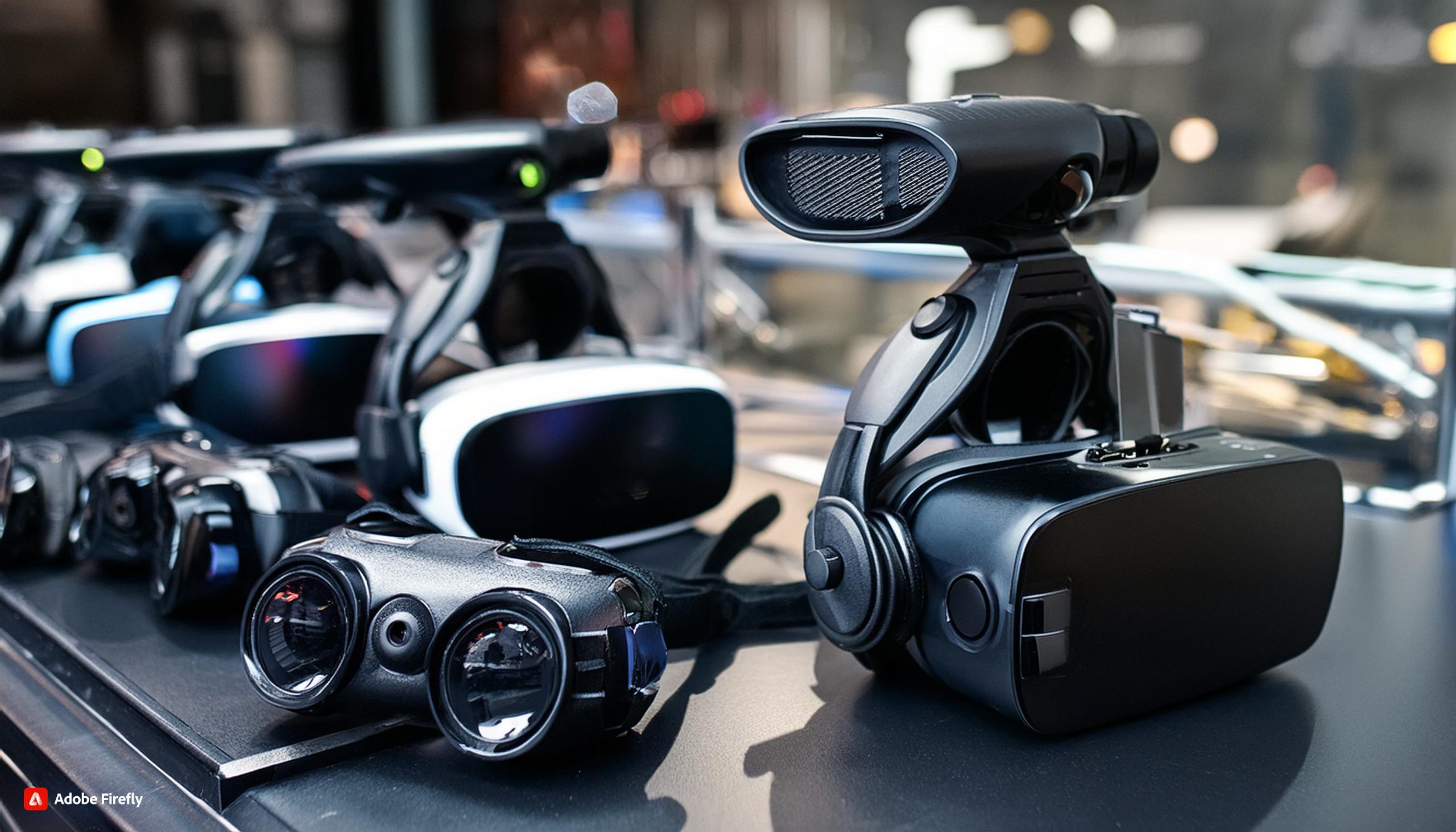
Augmented Reality vs. Virtual Reality (VR) are both immersive technologies, but they differ in how they alter our perception of reality:
- Virtual Reality (VR):
- Definition: VR completely immerses users in a virtual environment that shuts out the physical world.
- Experience: Users typically wear a VR headset that covers their eyes and ears, blocking out the real world and replacing it with a simulated one.
- Interaction: In VR, users can often interact with this virtual environment through controllers or gestures, feeling fully immersed in a different reality.
- Augmented Reality (AR):
- Definition: AR overlays digital information or virtual objects onto the real-world environment.
- Experience: AR enhances the real-world environment rather than replacing it. Users can see both the physical world and digital elements superimposed onto it.
- Interaction: AR is often experienced through devices like smartphones, tablets, or AR glasses, which blend the real and virtual worlds seamlessly.
Key Differences:
- Immersion Level: VR offers full immersion in a virtual world, while AR enhances the real world with digital elements.
- Device Use: VR requires a headset to block out the real world, whereas AR can be experienced through various devices that blend digital content with the real environment.
- Applications: VR is often used for gaming, simulations, and virtual experiences, while AR finds applications in education, retail, navigation, and real-time data overlays.